The future of autonomy will integrate aerial and ground systems
StoryMarch 03, 2026

Dr. James Crowell
Crow Industries
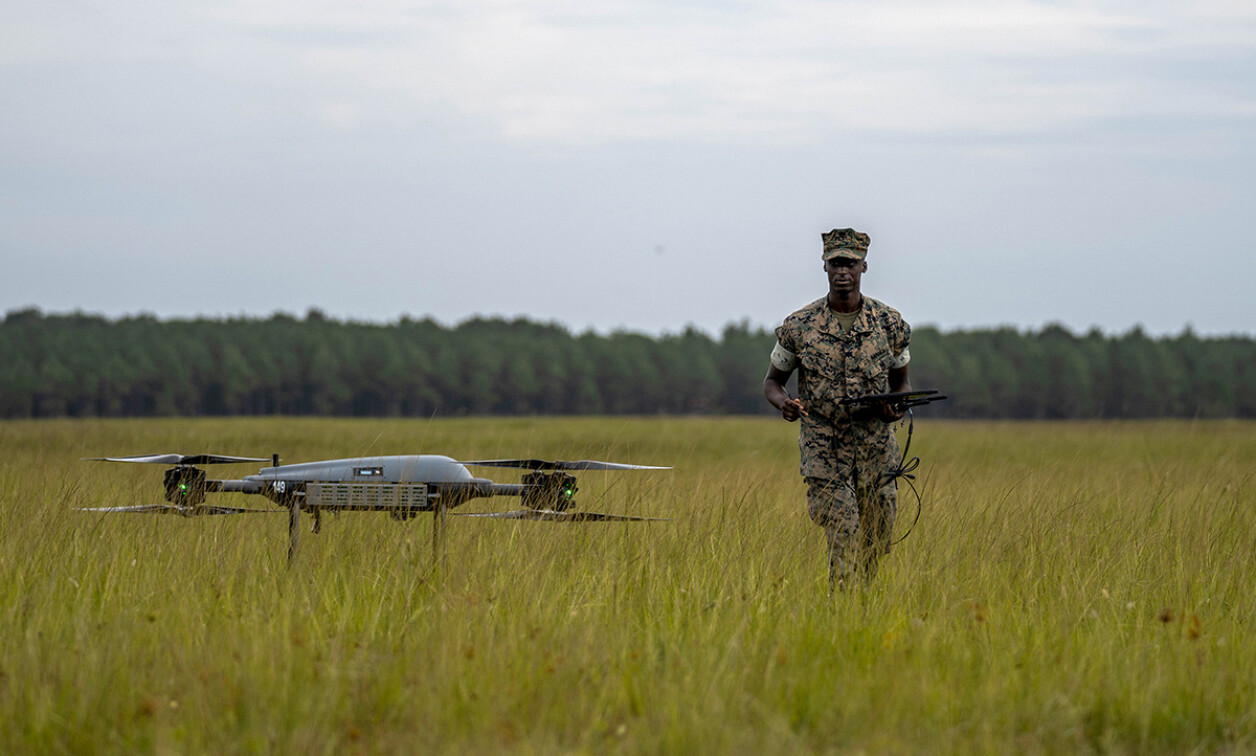
The defense sector is saturated with aerial drone warfare, yet far less attention is paid to the ground domain. While air autonomy has dominated recent operational narratives, but the next advantage in autonomy will come from tightly integrating unmanned aerial systems (UAS) with unmanned ground vehicles (UGVs). Together, these systems address tactical blind spots that aerial platforms alone cannot solve, combining reach and speed with endurance, logistics capacity, and terrain control to enable more resilient, scalable, and survivable operations.
Autonomy is a dominant focus in today’s military, but the conversation is heavily focused on air power. Small unmanned aerial systems (sUASs) have become synonymous with autonomous warfare, especially in Ukraine, where commanders describe hundreds of thousands of drone missions flown in a single month. That larger-scale use of UASs underscores how critical air autonomy has become, but it also exposes a growing gap. Air-only autonomy struggles with the realities of deployment: terrain, sustainment, and electronic warfare (EW) at the tactical edge are all factors as well.
The next major leap in autonomy will not come from deploying more drones, but will come from integrating aerial systems with unmanned ground vehicles (UGVs) to create a coordinated, multidomain autonomous force that reduces blind spots, increases endurance, and maintains effectiveness when conditions make air assets less effective.
The blind spots at the tactical edge
While it’s true that sUASs excel at speed, reach, and wide-area sensing, their effectiveness drops sharply at close range. Environments like dense foliage, urban clutter, subterranean spaces, bridges, and interiors all create occlusion zones where overhead sensors lose their ability to gather accurate information. Even after a target is found, the last 50 to 100 meters often require confirmation angles that drones cannot maintain safely or continuously.
This limitation is not theoretical. Reports from the Ukraine conflict have described extended “kill zones” where drone density is high, yet ground maneuver and concealment still dictate outcomes. Persistent aerial presence does not eliminate terrain complexity, but actually amplifies the need for complementary systems that can operate within it.
UGVs address this gap by providing reliable information at the ground level. Positioned forward, they can conduct close-range inspection, validate detections, inspect routes, deploy sensors, and provide confirmation from angles unavailable to airborne platforms. When integrated properly, sUASs enable rapid cueing while UGVs deliver confirmation, with the pairing resulting in reduced false positives, shortened decision cycles, and limited redundant sorties.
Endurance and logistics: the constraints autonomy ignores
The use of drones enables more activity, but maintaining them is often more challenging than people think. High sortie rates mean more batteries to recharge, airframes to recover, parts to repair, and vehicles to replace. At scale, autonomy becomes less about sensing and more about logistics throughput.
A force flying thousands of sUAS missions per month is also moving and managing thousands of batteries, payloads, and spare components. Without automation on the ground, that burden falls on personnel, slowing operations and increasing exposure. UGVs can absorb much of this load: Autonomous ground platforms can perform resupply runs, transport batteries and payloads forward, reposition launch and recovery points, and move sensors or communications relays without putting soldiers at risk. In integrated operations, UGVs function as mobile sustainment nodes while sUASs focus on reconnaissance, targeting, and rapid retasking.
This division of labor increases overall endurance. While sUASs rotate through shorter missions, UGVs maintain a persistent presence, enabling longer time-on-station coverage with fewer airborne assets.
Resilience under electronic warfare
Air autonomy often breaks first under EW. Many sUASs depend on radio-frequency links and global navigation satellite systems (GNSS) for navigation and control, making them vulnerable in challenging environments. Public analyses from Ukraine suggest that a large majority of sUAS losses are attributable to jamming or spoofing rather than to kinetic interception. Precision-guided munitions have also shown dramatic performance degradation during periods of heavy GNSS interception.
An autonomy strategy that relies exclusively on airborne platforms inherits this fragility. When links degrade, aerial assets are forced to abort, loiter ineffectively, or fail outright.
Integrated sUAS-UGV systems can suggest a path to graceful degradation. Ground vehicles can host persistent sensors, alternative communications paths, and localized navigation references that remain effective when aerial links are disrupted. They can maintain mission continuity, provide line-of-sight relay points, and support retasking once conditions improve. Rather than collapsing under EW pressure, the system adapts.
Three integration playbooks that matter
When aerial and ground autonomy are treated as a single system, several repeatable operational patterns emerge:
- Cue-confirm loops: Aerial detections trigger rapid ground verification. sUASs identify potential targets; UGVs confirm at close range. The payoff is faster confirmation and fewer false alarms.
- Distributed persistence: UGVs hold terrain, sensors, and logistics while sUASs cycle through shorter missions. The result is extended coverage duration without proportionally increasing sortie counts.
- Layered response: sUASs provide overwatch and rapid assessment while UGVs handle proximity tasks such as inspection, delivery of effects, and emplacement. This approach reduces risk to personnel and increases operational tempo.
Each pattern shifts autonomy from disparate platforms to integrated capability.
What engineers should measure
To prove that integrated autonomy works, metrics must go beyond platform performance. Relevant measures include time-to-detect, time-to-confirm, and time-to-respond; hours of continuous coverage per sector; operator-to-asset ratios; mission completion rates under EW conditions; and logistics throughput achieved without human involvement. These metrics capture system-level effectiveness rather than isolated capability.
Drones will continue to dominate coverage of modern warfare, but air autonomy alone cannot solve the realities of terrain, endurance, and contested environments. The future of battlefield autonomy lies in tightly integrating sUASs and UGVs into cohesive multidomain systems that close blind spots, sustain operations at scale, and remain resilient under pressure. The broader lesson applies across the autonomy ecosystem: Victory will belong to forces that treat autonomy as a combined-domain capability, not solely an airborne one.
Dr. James Crowell is the founder and CEO of Crow Industries. Before starting Crow Industries in 2018, he specialized in the development and deployment of polar, maritime, volcanic, and space systems at NASA.
Crow Industries www.crowindustriesinc.com/