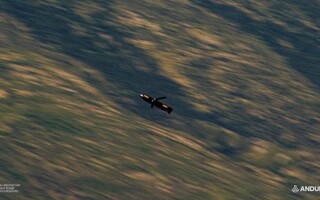
GUEST BLOG: Closing the gap -- Propulsion requirements for next-generation counter-UAS interceptors
BlogMarch 11, 2026

Erin Durham
PBS Aerospace

Russia's use of low-cost Shahed and Geran drones in Ukraine has exposed a gap in Western defense. NATO and allied forces have no efficient counter to cheap, high-volume aerial threats. Each swarm attack forces defenders to use interceptors that cost hundreds of times more than the incoming drones. Stockpiles deplete and production cannot keep up. Current propulsion systems are either too expensive, too slow to manufacture, or lack the performance to complete the mission. The solution requires propulsion systems that deliver performance and reliability at a price point and production scale that matches the threat. Turbojet engines with start times less than 20 seconds, speeds as fast as 0.9 Mach, and proven manufacturability enable a path forward.
Most counter-uncrewed aerial systems (C-UASs) cannot reach adversary drones. Propeller-driven interceptors and solid rocket motors fall short on range. Directed energy weapons and high-powered lasers face the same limitation.
Then there is the issue of volume: Shahed and early Geran-style drones aren’t fast and are not hard to intercept one at a time. The quantities are what make them difficult. Current interceptor magazine depth is not where it needs to be for swarms. A defense optimized for single threats offers little against an adversary that launches in dozens.
Cost makes it worse. An AMRAAM missile costs more than $1 million, while a Coyote costs $125,000. Current systems use rocket-assisted ignition, then a jet engine for the cruise stage, both of which are expensive assets to expend against cheap threats.
The math is simple: 95% reliable means 5% failure. Each interceptor costs six figures, while the threat costs a fraction of that, meaning that the attacker wins on economics – defenders expend expensive assets faster than they can be replaced.
What the engine has to do
C-UAS systems need faster start times than cruise missiles. The engine has to start in less than 20 seconds and has to hit 0.9 Mach, but propeller systems cannot reach the threat. Interceptors need digital throttle control for maneuverability and quick acceleration, must have fuel consumption below a certain threshold, and must support concepts like VTOL [vertical takeoff and landing]. Miss any of these and the mission fails.
Meeting these requirements depends on the engine's electronic control system, which manages start sequencing, fuel flow, exhaust gas temperature, and spool speed. It needs to interface with the interceptor's guidance and navigation system so throttle response translates directly to maneuverability. That is a systems-integration challenge. The controller has to be fast enough to support the mission and reliable enough to function on first use after months of storage.
These are the baseline requirements for an engine that can power a viable C-UAS interceptor. Start time determines whether you can respond to a threat that is minutes away. Speed determines whether you can reach it before it reaches what you are defending. Throttle response determines whether you can maneuver to intercept a target that may itself be maneuvering. Fuel efficiency determines whether you have the range to get there and back – or to loiter until the threat arrives.
Producibility extends beyond the mechanical engine to the electronics: Modular, open-architecture engine controllers make production faster. However, COTS [commercial off-the-shelf] electronics have to be able to survive the vibration of the launch and the thermal environment near the turbojet exhaust. What’s more, swarms change the math: Production has to scale and surge quickly.
The latest push is toward using COTS components in low-cost interceptors. Traditional aerospace programs prioritized performance over producibility, but that doesn’t work here – you need both. The tradeoffs are real – lower cost versus performance.
This is the central tension in C-UAS propulsion: The engine has to perform but it also has to be cheap enough to expend and fast enough to produce at scale. Traditional aerospace approaches optimize for performance and treat cost as a secondary concern. That model breaks when the threat is cheap and abundant. The C-UAS mission demands a different approach.
Engines with thousands of operational flight hours solve this problem – the highest technology readiness level (TRL), combat-tested, already proven in operational environments. That is a foundation prototypes cannot match.
Thousands of flight hours validate more than the mechanical engine. They validate the electronic control system, which reduces integration risk for new interceptor platforms. Operational data informs thermal models, vibration profiles, and power budgets that systems integrators use to design the interceptor's electronics.
Programs built on proven propulsion move faster. There is less integration, schedule, or performance risk, plus the engine is a known quantity. That matters when the timeline is measured in months, not years. When the threat is evolving in real time, program timelines have to compress. Proven engines make that possible.
Turbojet propulsion can address all of these issues: Speed up to 0.9 Mach gets you to the threat, start times less than 20 seconds mean the engine is ready when you need it, digital throttle control gives you maneuverability, VTOL configurations mean you are not tied to a runway, and fuel consumption below 1.3 lbm/lbf/hr keeps you in the fight.
PBS Aerospace · https://www.pbsaerospace.com/