How small business and the war on terror supercharged autonomy
StoryMarch 02, 2026

Bryan Bockmon
AimLock
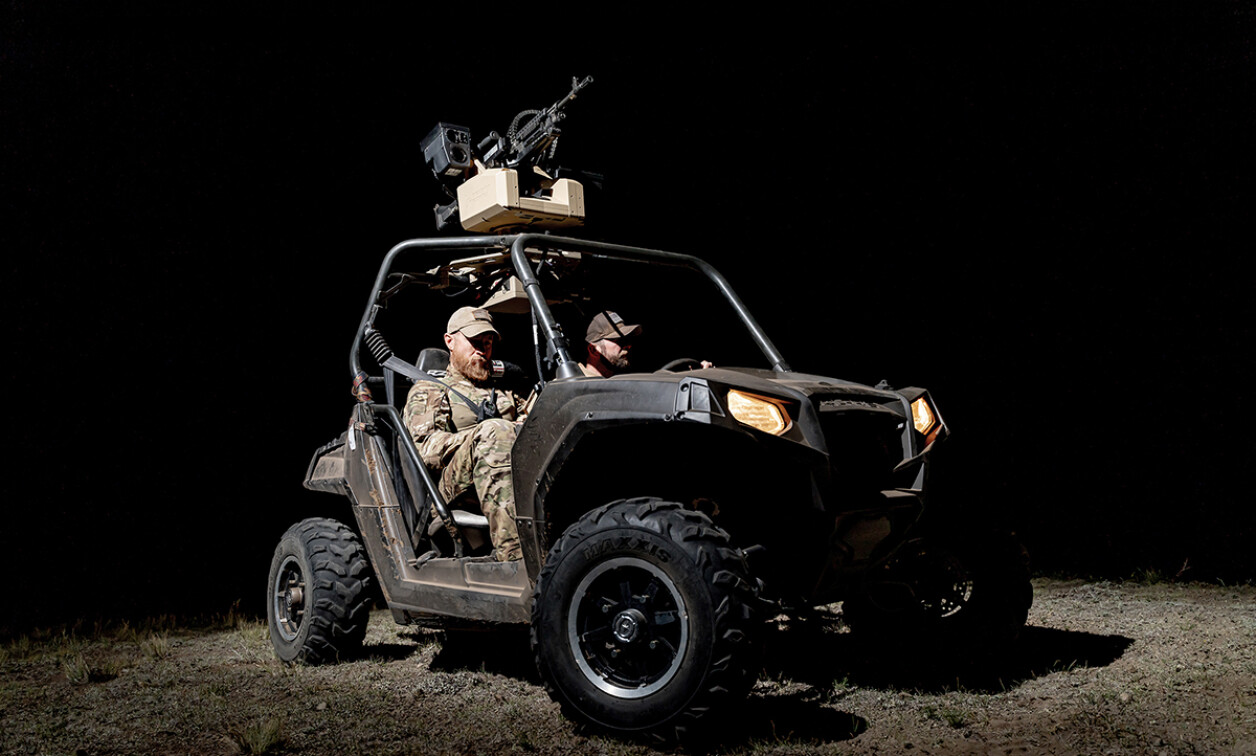
Autonomy has gone from being a controversial idea in the defense industry to becoming one of the most important technologies for the future of warfare. The growing proliferation of battlefield threats around the world – with a particular emphasis on the Russia-Ukraine War – has helped to drive the growth of autonomous technologies. Two factors have been crucial in this growth: the visionary approach of smaller players in the defense industry and the real-time feedback loop formed during decades of counterterrorism operations.
Today, warfighters face ever-evolving asymmetric threats and terrorist tactics on the battlefield, and demand for autonomous technologies to keep personnel safe has never been higher. Autonomy is now becoming a vital part of everything from counter-unmanned aerial systems (C-UAS) and broader force-protection measures, to emerging maritime applications. Technologies that can identify, engage and destroy targets with little human intervention (or even no human intervention) are growing in importance.
Autonomous targeting technologies are also improving the performance of human operators across every military domain, enhancing the speed and accuracy of any engagement. These tools and technologies improve safety for personnel, platforms, and infrastructure. But without small businesses and the grueling lessons learned in the ongoing war on terrorism, today’s warfighters would be less well-equipped to face the threats seen on the battlefields of today and the ones that will crop up tomorrow.
Small businesses got to work innovating
Engineering teams at small businesses in the defense industry and policymakers had been keenly aware for many years that it was vital to build autonomy to defend forces against the growing threat of adversarial nations. However, that same awareness was lacking in defense program offices, where leaders were still debating the ethics of the technology. It would take years before they accepted what small defense businesses and so many people in Washington had been saying all along.
Backed by initiatives like the Small Business Innovation Research (SBIR) and Small Business Technology Transfer (STTR) programs, early efforts by these small businesses pushed forward, developing enabling and niche technologies such as artificial intelligence (AI)-based perception, autonomous navigation, and mission-specific payloads. While think tanks and boardrooms debated policy, small firms focused on capability – driven by real-life, warfighter needs.
Accelerators linked to the U.S. Department of Defense (DoD), such as the Defense Innovation Unit (DIU) and SOFWERX, were also key in giving emerging companies an avenue to prototype and deploy real-world solutions rapidly. In fact, many autonomy first-adopters cut their teeth building niche systems for military units, such as drone swarms; low size, weight and power (SWaP) intelligence, surveillance, and reconnaissance (ISR) platforms; or edge-computing payloads. No matter what they specialized in and no matter what the immediate payout of their work, many small businesses dabbling in the autonomy space in its earliest iterations knew that when the wider world woke up to autonomy, their technology would be at the heart of keeping the warfighter safe from new and emerging threats.
How counterterrorism highlighted the need for autonomy
The practical lessons of how autonomous technology should work have come through working closely with soldiers on the ground through the decades of the war on terror. Like many military technologies, autonomous technology has been developed with the close involvement of forces, helping leaders in the sector to work out which formats of the technology are going to be successful.
The war on terror saw warfighters facing adversaries who used unconventional tactics and often blended in with the civilian population. In Iraq and Afghanistan, for example, this approach was highlighted by the use of improvised explosive devices (IEDs), makeshift drones, and tactics that exploited complex urban environments that housed a high volume of civilian bystanders. Autonomous systems began to show their value here, enabling round-the-clock surveillance, reducing the risk to personnel in route clearance operations, supporting a more rapid response to burgeoning aerial threats, and reducing the overall danger of working around IEDs.
As noted by the Centre for Emerging Technology and Security in its study several years ago, counterterrorism efforts showed that operations required capabilities that legacy systems simply couldn’t deliver fast enough. This realization helped drive a need for technology to minimize the risk to personnel, by offering persistent surveillance and precision targeting.
Terrorist groups have also rapidly adopted technologies such as drones and asymmetric tactics. The unpredictability of such groups has driven a need for technological innovation. The increased use of drones by both sides has no doubt driven acceptance of autonomous technologies, paving the way for wider adoption worldwide. (Figure 1.)
[Figure 1 ǀ The rapid adoption of drones or unmanned aerial systems (UASs) has driven acceptance of autonomous technologies across the world. Pictured: AimLock’s Switchback counter-UAS system mounted on a UAS. Image courtesy AimLock.]
Roadblocks today: From acceptance to implementation
Driving success in autonomous weapons in a world reshaped by the war on terror requires input from innovative small businesses that helped shape today’s autonomous technology. Leaders in the procurement industry widely believe an open approach to autonomy is key to saving the lives of warfighters on the ground and to enhancing battlefield effectiveness.
Systems need to take a modular open systems approach (MOSA) to work effectively with many battlefield-management systems and standards for command and control. Designing and building using MOSA means that legacy systems can easily be upgraded to include autonomous targeting and engagement solutions that are ready for the modern battlefield. Standardized, modular components also mean that autonomy can be delivered in a highly cost-effective way and deployed rapidly by units in the field.
Acceptance of autonomy as a force multiplier: Going forward
Once seen as almost unthinkable technology, autonomy will continue to reshape the battlefield of tomorrow. Small businesses, working closely with forces from around the world, have helped to shape the form of autonomous technology we see on the battlefield today, as soldiers adapted to the changing threats of the war on terror. Those same small businesses will be vital to driving the wider adoption of this life-saving technology, using a modular approach to protect warfighters on the ground with cost-effective and rapidly deployable autonomous solutions.
Bryan Bockmon is the CEO of AimLock, a company that develops autonomous systems for defense applications. He has over two decades of experience across R&D, engineering, and leadership in autonomy and weapons systems development and is responsible for driving AimLock’s business strategy, critical partnerships, and product roadmap. AimLock is advancing autonomous and aided target recognition systems powered by the company’s core targeting modules (CTMs) that are purpose-built with a modular open systems approach (MOSA).
AimLock https://aim-lock.com/