
How the U.S. is preparing operators for tomorrow's warfare
StoryMay 21, 2026

Flavia Camargos Pereira
Military Embedded Systems
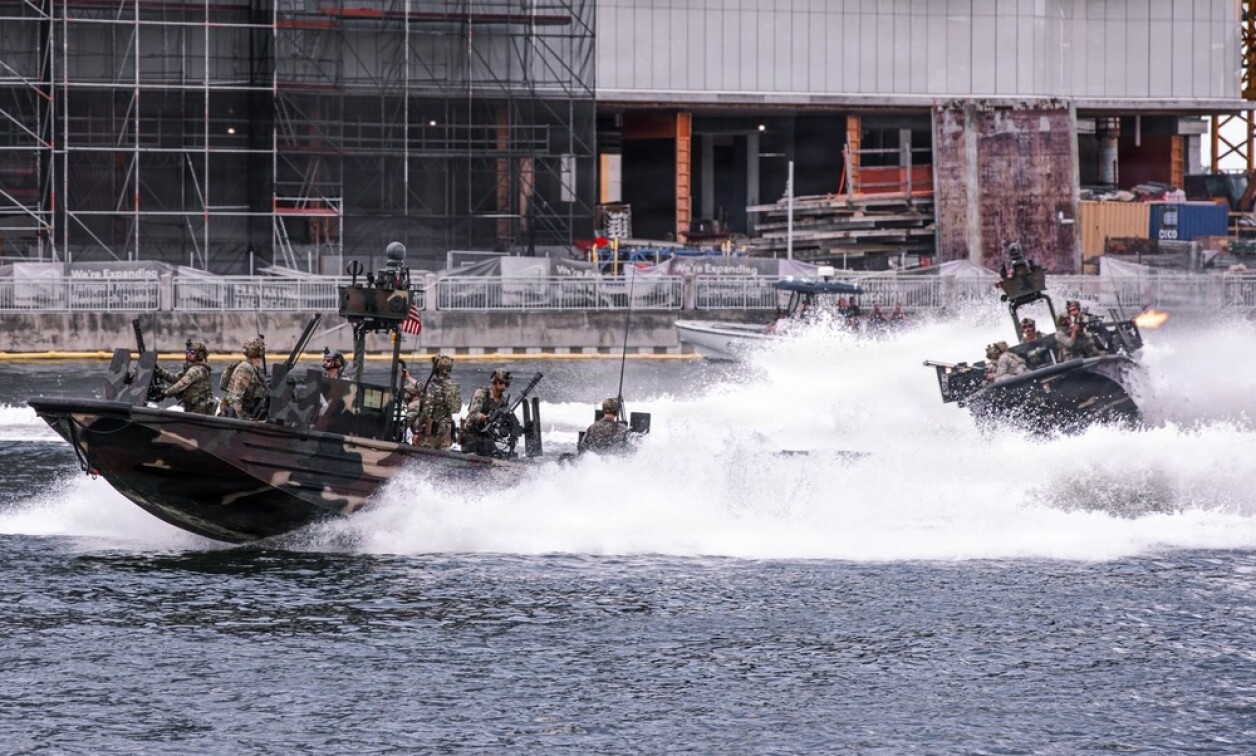
SOF WEEK 2026--TAMPA, Fla. The U.S. military and the national defense industry have been working on multiple lines of action to prepare Special Operators to succeed in the warfare of tomorrow and the future. Their strategy includes equipping Special Operations Forces (SOF) teams with advanced equipment and technology and leveraging ways to enhance warfighters' cognitive capacities.
During a May 21 panel discussion at SOF Week 2026, Col. Amanda Robbins, United States Special Operations Command (USSOCOM) Command Psychologist and Clinical Psychology Consultant to the Army Surgeon General, stated that artificial intelligence (AI) and tools for data collection and analysis are critical in this process.
“In the [SOF] community, we pick people who don't quit, who are going to continue to move, shoot, and take action even if they are hurt. We know that they don't go and tell their docs, 'hey, I had a hard landing,' or 'I feel a little nauseated after that training exercise,'” Robbins said.
In her opinion, technologies can be crucial to improving diagnostics and getting operators “back on the line faster.”
“Using our blast sensors is one way to objectively say, 'it's not a judgment call, it's not about you, it's about performance and making sure that you're at the top of your game,'” she asserted.
Tyler Van Hook, Chief Strategy Officer at Kognitiv Edge -- a data-driven human-capital company employed by SOF -- said that it is necessary to arm warfighters “with the right tools [and] to empower the providers, the instructors, the coaches, the senior leaders.”
Van Hook said that he believes it is critical to figure out how to provide the “right, trusted data that is actionable at echelon" or operational command tiers.
“We need to be able to rapidly connect that technology, get that information back to the end users," he stated. "From an industry perspective, I think it is incredibly important to create data-centricity.”
Improving operators’ skills also requires paying great attention to their mental health. Maj. Gen. (U.S. Army, Retired) Clay Hutmacher, now an advisor with artificial intelligence/machine learning (AI/ML) firm Primer Technologies, stated that in the past, cognitive challenges were only detected when there “really was a degradation of their professional performance, which was the last thing that goes below the waterline.”
In that vein, USSOCOM is focusing on identifying cognitive and psychological issues at the initial stages and providing operators with the required treatment: Col. Robbins said, "One of the things we are striving for in the Surgeon General's Office is to really help establish a common monitoring program. So you are tackling snow, rather than avalanches.”
The U.S. military and American suppliers, however, may face some challenges in implementing those approaches, with allocating the proper budget to fund them being perhaps the most important one.
“We often talk about humans being more important than hardware,” Robbins noted “But our budgets and policies don't always reflect that.”
From Van Hook’s perspective, operators’ mission sets are becoming more complex, but the training time frame has not changed.
"I saw we have operators flying drones, setting up networks. We are now asking way more of the operator than what we previously asked, but in the same exact time period."