Taking flight: A new era for rotary-wing avionics
StoryMay 06, 2026

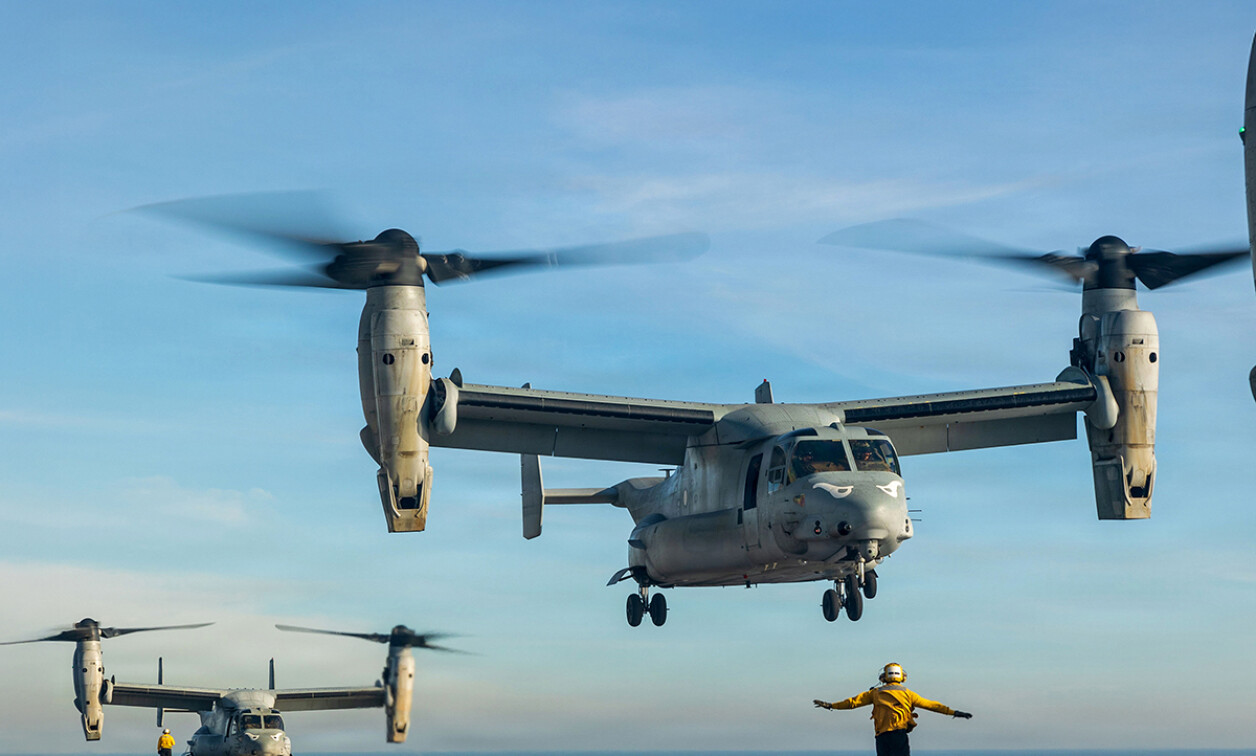
Across the U.S. military and allied forces, rotary-wing avionics are being rebuilt from the inside out: new architectures, smarter sensors, and software-defined systems designed to keep pace with threats that evolve faster than hardware-refresh cycles can keep up with.
The helicopter cockpit has always been a crowded, demanding place – a collection of gauges, switches, and toggles that pilots spent years learning to read in seconds. That era is ending. Decades-old platforms like the Black Hawk and Apache are being asked to survive in environments their original avionics were never designed for – GPS-contested, communications-degraded, and saturated with threats that can detect and engage a helicopter before its crew knows they’re being tracked. At the same time, a new generation of platforms is being designed from scratch around open architectures and software-defined systems.
The questions facing the defense industry on helicopter avionics are as much about process as technology: How do you modernize a cockpit that has to stay mission-ready while it’s being upgraded? How do you build security into hardware that will still be in service thirty years from now? And how do you make open architecture a real, auditable engineering reality rather than a marketing claim?
Open architecture: from policy to program reality
A spokesperson with RTX (Arlington, Virginia) says investment in upgrades has been consistent and is accelerating across U.S. and allied platforms, and open architecture is a big part of that push.
“The primary drivers are addressing system obsolescence, accelerating adoption of modular open systems architectures, and enabling faster integration of new mission capabilities that improve situational awareness, interoperability, and overall mission effectiveness,” the spokesperson says.
The modular open systems approach (MOSA) began years ago as congressional direction, but today it has become the organizing principle for virtually every major U.S. military aviation program. For example, the Army’s Program Executive Office (PEO) Aviation has made MOSA the framework for affordability, readiness, and capability growth across its entire aviation portfolio, with FACE, or Future Airborne Capability Environment, Technical Standard and HOST [Hardware Open System Technologies] identified as foundational standards.
That policy language is translating into actual program decisions. The selection of RTX subsidiary Collins Aerospace (Charlotte, North Carolina) on the U.S. Army’s UH-60 avionics modernization effort is one example. The RTX spokesperson points to this pick as evidence of “growing customer demand for MOSA aligned solutions that can accelerate capability upgrades while reducing integration risk.”
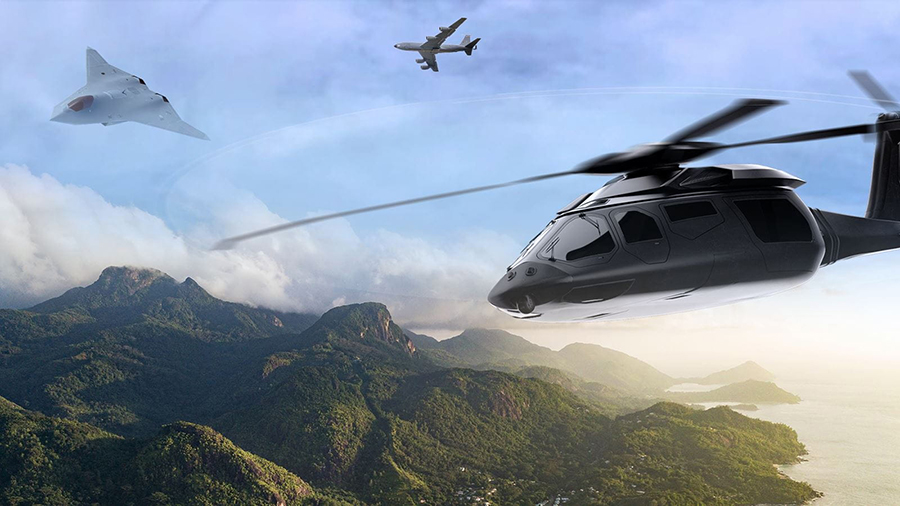
[Figure 1 | Collins Aerospace’s Mosarc avionics architecture is a family of modular open systems products built around MOSA compliant computing, networking, displays, and software that is designed to enable rapid capability integration across military rotorcraft. Image via Collins Aerospace.]
Boeing describes the AH-64E v6.5 upgrade path as the Army’s first MOSA compliant enduring aircraft, built around a more capable mission-system backbone for communications, navigation, sensor fusion, and future technology insertion. Bell, for its part, is making the same architectural argument for its MV-75 FLRAA tiltrotor, describing the platform as “built with MOSA” from the ground up.
Not every program is starting from scratch. The V-22 Osprey’s avionics story is the legacy-fleet version of the same challenge: The VeCToR cockpit-modernization program and flight-control computer redesign are framed primarily as obsolescence mitigation with a path toward more affordable future modifications rather than as a ground-up reinvention. The practical difference between a clean-sheet MOSA design and a retrofit MOSA compliance effort is sizable, but the defense industry is working hard to close that gap.
The challenge of integration
Talk to engineers working on helicopter avionics upgrades and you might be surprised by what they say keeps them up at night. The usual suspects – fitting new gear into tight spaces, sourcing parts, getting hardware certified – are not actually the biggest obstacles, says Bill Dillard, senior business development manager for aerospace and defense at Microchip Technology (Chandler, Arizona).
“Modern avionics platforms offer significant size, weight, and power (SWaP) advantages and are supported by mature, dependable supply chains,” he says. “Certification is a well-understood and manageable level of effort.”
The real headaches, Dillard says, lie in getting power where it needs to go and making old and new systems talk to each other. Older helicopters were built around data formats and proprietary communication protocols that have no straightforward connection to modern digital systems.
“While converter solutions exist, they are typically suboptimal in terms of performance, complexity, and long-term maintainability,” he says.
[Figure 2 | Microchip Technology’s PolarFire FPGAs [field-programmable gate arrays] and SoCs [systems on chip] provide security for avionics applications, combining supply-chain assurance, tamper resistance, secure boot, and cryptographic engines to protect hardware and data. Image via Microchip Technology.]
The RTX spokesperson says that the core challenge is updating cockpits that were built as one-of-a-kind systems, without taking the aircraft out of service to do it. Open architecture, the spokesperson asserts, is how the industry is beginning to solve that problem.
Seeing through the fog
Solving the integration problem is only the starting point. Once new systems are on board, the question becomes what they enable – and right now, the capability the military wants most is the ability to keep flying and fighting when conditions turn against it. Dust storms, fog, smoke, darkness: the environments where helicopters have always been most vulnerable, and where the next generation of cockpit technology is most focused.
The Army’s Degraded Visual Environment Mitigation program and its follow-on effort are the most visible examples of this effort, combining infrared sensors, radar, and LiDAR to build real-time 3D terrain maps that pilots can use when their eyes can’t be trusted, according to an Army fact sheet.
The RTX spokesperson states that sensor fusion – combining data from multiple sources into a single picture for the pilot – is the technology closest to being widely adopted across the fleet. “It delivers immediate operational benefits without requiring a full platform redesign,” the spokesperson notes.
The goal is not to have more screens but to present fewer decisions, a situation that gives pilots a cleaner, faster read on what’s happening around them.
Helmet-mounted displays are part of that sensor integration as well. Collins Aerospace’s Zero-G helmet is designed to put critical flight and mission data in front of a pilot’s eyes without adding to the physical strain of a high-workload mission. On the Apache, Boeing has been developing haptic controls and automated hold modes that reduce the mental and physical effort of flying in degraded conditions, according to Boeing documentation.
Across every program, the pattern is the same: the avionics takes on more of the burden so the pilot can focus on the mission.
Cybersecurity: built in, not bolted on
Open architectures create a cybersecurity challenge, however: The more interfaces a cockpit has, the more entry points exist for an adversary to exploit. Dillard says that Microchip’s answer to that problem starts at the chip level, before software ever enters the picture. “Hardware-rooted security is increasingly recognized as essential to avionics system integrity, with formal requirements now flowing into design and certification processes through DO-326A and DO-356A.”
Military helicopters can stay in service for 30 years or more, which makes the security situation more complex than it may initially look. A system that is secure today may not be secure against the threats of 2040. Quantum computing alone could eventually break encryption methods that currently seem impenetrable. Dillard’s solution is to build security into the silicon itself – a foundation that can be updated over time without replacing the underlying hardware.
“A strong, silicon-embedded security enclave establishes a durable root of trust and can be progressively strengthened through software and cryptographic upgrades as threat models evolve,” he says.
The Army’s own guidance on MOSA treats cybersecurity the same way – not as a feature to be added at the end, but as something that has to be designed in from the start, using established controls, according to an Army release. After all, an open architecture that can be upgraded quickly is only an advantage if it cannot also be compromised quickly.
Cockpits as network nodes
The communications picture is changing fast as well. Helicopters are no longer just voice platforms, but are becoming data nodes in a broader tactical network as they share targeting information, sensor feeds, and situational-awareness data with ground forces and other aircraft in near-real-time. Marine Corps H-1 helicopters have already demonstrated the ability to operate on a mixed Link 16 and ANW2 network alongside ground stations, and the Navy’s CMV-22B added a high-frequency radio capable of communicating beyond line-of-sight without relying on satellite links, according to information from the Navy.
The RTX spokesperson frames all of this connectivity work as central to what customers are actually buying when they specify open, standards-based interfaces: The ability to plug into whatever network the joint force is running, now and in the future.
What’s coming next
The roadmap for the next several years is getting clearer. Bell’s MV-75 – the Army’s next-generation tiltrotor assault aircraft – reached a major development milestone when the Army accepted its first virtual prototype in June 2025, with first flight planned for 2026, low-rate initial production in 2028, and initial fielding in 2030, according to the Army. The MV-75 is the clearest statement yet of where U.S. assault aviation avionics are headed: open architecture, digital backbone, and a design built to accept new capabilities as they become available.
On the legacy or upgrade side, progress is also ongoing. In March 2026, the U.S. Army took delivery of the H-60Mx, a Black Hawk modified to fly with or without a pilot at the controls, integrated with Sikorsky’s MATRIX autonomy system, according to the U.S. Defense Advanced Research Projects Agency (DARPA).
The delivery is part of DARPA’s Aircrew Labor In-Cockpit Automation System (ALIAS) program, which looked “to create a highly automated system that could be integrated into existing aircraft to enhance mission flexibility and safety, particularly in complex and contested environments,” according to DARPA. Fully autonomous combat operations are not imminent, but the arrival of the H-60Mx shows that optional piloting has moved from a research concept to hardware the Army is actually testing.
The spokesperson for RTX says the broader industry trend is toward upgrades that are smaller, faster, and lower-risk – changes that extend the life of existing fleets without taking aircraft offline for long periods. MOSA is what makes that possible: when systems are built around open, modular interfaces, a new radio or sensor can be swapped in without disturbing everything around it.
Dillard sees the same logic applying to security. Getting the architecture right from the start – open interfaces, modular software, hardware-embedded security – is what enables a helicopter’s avionics system to be relevant and protected across a service life that may span multiple decades and as-yet-unpredicted threat environments.
The cockpit of the future will not look like the one it replaced. It will be quieter, cleaner, and far more capable – and the work being done right now, on chips and data buses and software-partitioning schemes that most people will never see, is what will make that possible.
SIDEBAR
Certify in the lab, then fly
Getting new avionics onto a military helicopter is not just an engineering problem – it is a paperwork problem, but this paperwork exists for good reason. Flight-critical software has to be verified to standards that don't move as fast as commercial technology does, and that tension between upgrade speed and testing rigor is one the industry has been working to resolve.
The answer, increasingly, is to do as much of the hard work as possible before an aircraft ever leaves the ground. According to Bell Helicopter its Weapons Systems Integration Lab brings together fly-by-wire controls, avionics, electrical systems, hydraulics, and mission systems under one roof for end-to-end testing. Naval Air Systems Command (NAVAIR) engineers are working on the Common Systems Integration Lab, which does the same for cockpit upgrades, thoroughly verifying that new equipment works properly alongside the legacy systems it has to coexist with, according to a NAVAIR release. Additionally, when Army, Bell, and NASA teams collaborated to evaluate the MV-75's flight-control laws, they used a full-motion simulator to work through handling qualities and control-law refinements before the aircraft flew a single hour.
The standards that govern this work – DO-178C for software, DO-330 for tool qualification, DO-297 for integrated modular avionics – are not obsolete. What is changing is how efficiently the industry can meet them. The hybrid model that's emerging from these trials uses commercial off-the-shelf (COTS) technology wherever the certification burden allows it, and keeps purpose-built, fully qualified designs where safety or mission requirements demand them.
The ultimate goal of all this: To speed up development without resorting to possibly unsafe shortcuts.