Improved threat detection system to be developed for U.S. Army by Northrop Grumman
NewsMay 05, 2026

ROLLING MEADOWS, Illinois. Northrop Grumman won a U.S. Army contract for second-phase development of its Improved Threat Detection System (ITDS), which is intended to support aircraft threat detection and survivability, the company announced in a statement.
The contract follows Army flight tests during the first phase of the program, during which Northrop Grumman’s system was evaluated against competing systems, the statement reads.
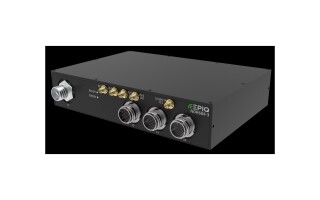
ITDS includes the company’s Advanced Tactical Hostile Engagement Awareness (ATHENA) sensor, a multispectral threat-warning sensor designed to provide 360-degree situational awareness for Army aviators, the company says. The sensor is intended to detect threats outside a pilot’s direct field of view, including threats beneath the aircraft, according to the statement.
The ATHENA sensor is built to identify incoming uncrewed aerial system (UAS) threats, loitering munitions, electro-optical/infrared targeting systems, guided man-portable air-defense systems, anti-tank guided missiles, small arms, machine guns, rocket-propelled grenades, and anti-tank guided munitions, Northrop Grumman says.
ITDS uses an open-systems architecture and is compliant with Future Airborne Capability Environment (FACE) and Modular Open Systems Approach (MOSA), the statement adds. The system is intended for current Army rotary-wing aircraft and future platforms, including the MV-75 Cheyenne II and AH-64 Apache.