TSN for defense, MOSA, Future Vertical Lift, and more with Tanika Watson of GE Aerospace
StoryJuly 31, 2025

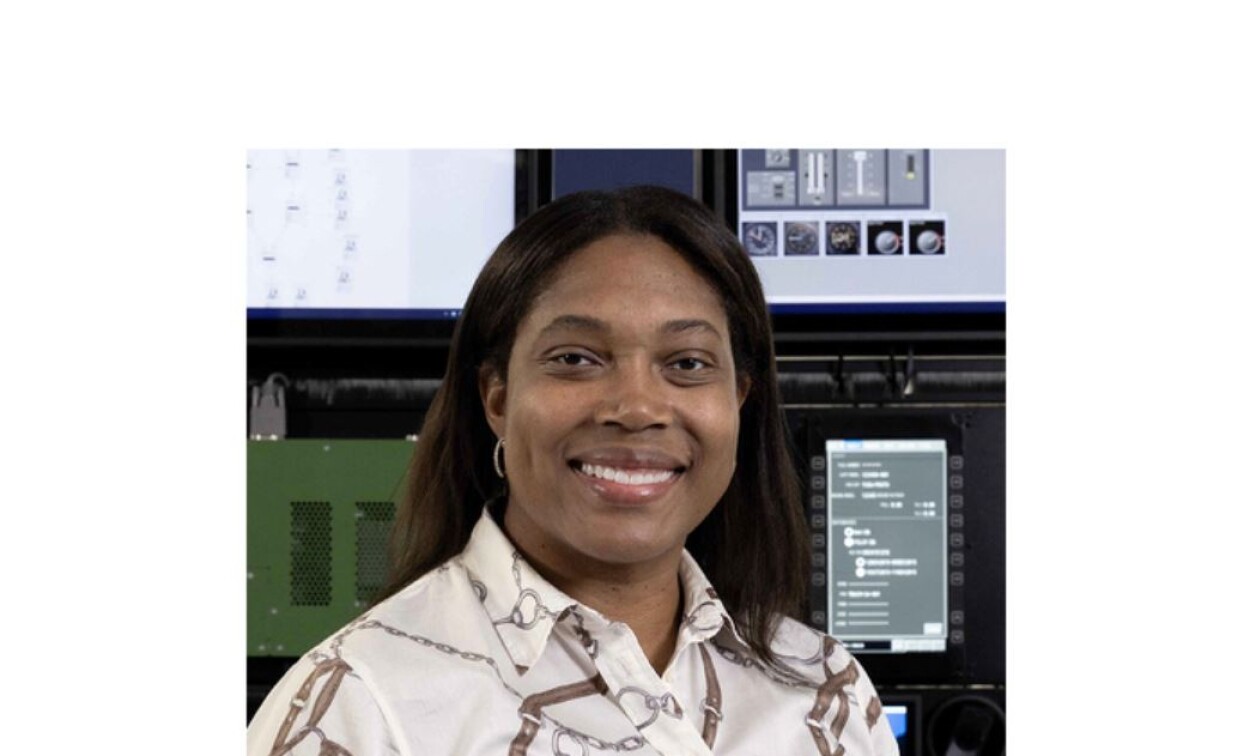
Recently, I spoke with Tanika Watson, executive leader for the GE Aerospace Future Vertical Lift business, about GE Aerospace’s subcontract to develop and deliver avionics systems for the Army’s Future Long Range Assault Aircraft (FLRAA) program, the role of time-sensitive networking (TSN) in the FLRAA digital backbone, and the impact of the modular open systems approach (MOSA) on military avionics systems going forward.
McHALE: Please provide a brief description of your background in the defense industry and your responsibility within GE Aerospace.
WATSON: As the executive leader for the Future Vertical Lift business, I’m responsible for program execution of all GE Aerospace – Avionics provided content on Future Vertical Lift platforms. I have more than 20 years with GE that spans [the] Healthcare, Power, and Aviation [divisions]. Prior to my current role, I was the Executive Commercial Operations Director for GE Aerospace’s Systems business.
McHALE: GE Aerospace made news recently with the announcement of a subcontract to design, develop, and deliver avionics systems for the Army’s Future Long Range Assault Aircraft (FLRAA) program, providing the platform’s digital backbone. Can you describe in terms of what capabilities the digital backbone will bring to the FLRAA aircraft that current platforms do not have?
WATSON: The digital backbone provides the customer with a vendor-agnostic path to make aircraft system modifications with ease when needed. They can realize the benefits of MOSA designs from the outset of Future Vertical Lift programs.
Going forward, the digital backbone will change how aircraft are updated and maintained, and it ensures that our soldiers have an advantage on the battlefield. The digital backbone is comprised of the physical components and the software required to make aircraft more adaptable and able to change at the speed of need.
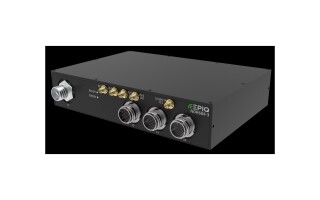
We are delivering these items today: Ethernet switches, nodal exchange points, and the tools that enable this digital data-distribution network. We have two decades of experience in the civil market space doing exactly this type of work.
Today, network updates supporting mission upgrades are a long and laborious process hamstrung by capacity. Time-sensitive networking, or TSN, provides a deterministic, high-speed, rapidly adaptable data transport highway to meet the current and future needs.
To make this a reality, the TSN network requires physical switches to route the data to where it is needed. As a lot of the mission systems today are based on older interfaces, nodal exchange points are needed to convert data from the legacy interface to TSN.
The second component, and no less important, are the tools to make this happen. Configuring the network and putting all the data onto a single data stream is complex. We provide automated, certifiable tools to enable the customer to configure the network.
McHALE: How does TSN factor into the design of the digital backbone? What problems did it solve?
WATSON: The GE Aerospace TSN digital backbone enables a modular open systems approach (MOSA) by delivering an open, scalable, high-speed data infrastructure.
The digital backbone will conform to the TSN aerospace profile by providing a low-latency data highway that meets current and future needs for moving data through the aircraft. TSN accommodates safety-critical and mission-critical applications, incorporating features that provide the deterministic and reliable behavior required to prioritize critical data.
The digital backbone allows customers to make changes to the weapon system without going to the systems integrator, which optimizes the cost and speed of change.
McHALE: What other advantages does TSN bring?
WATSON: Key tenets of TSN include the networking avionics and tools, interoperability, and high bandwidth and security. TSN is an open standard with no licensing requirements.
How it works:
Networking avionics and tools
- The GE Aerospace TSN digital backbone houses the required framework including the end systems, switches, data concentrators, and tool chain.
Interoperability
- The tools’ ease of use and configurability enables interoperability with third-party systems for a vendor-agnostic path to new systems and capabilities.
High bandwidth and security
- Increased bandwidth and security features help enable fielding of the latest mission-focused capabilities for the warfighter.
McHALE: What provided these functions previously? Ethernet? MIL-STD 1553? And does TSN work with those older interfaces, say, for a tech refresh?
WATSON: TSN accommodates various levels of traffic criticality, incorporating features that provide the deterministic and reliable behavior required to prioritize critical data.
TSN offers a much larger “pipe,” and one that can expand as more and more data throughput is required. This larger pipe enables convergence to a single redundant network eliminating multiple disparate networks; this reduces weight and improves maintainability and upgradability.
To incorporate older interfaces, we are also providing nodal exchange points to interface with 1553, ad-hoc ethernet, RS-422/232, ARINC429, Can bus, etc. and convert the signals to and from TSN.
As you can imagine, scheduling a 1 MB/sec or 196 kbaud signal over a 10 Gbit/sec data stream is a bit of a challenge. This is where the GE Aerospace hardware and software in the modal exchange points combined with our tools within Chronos are key, converting the data and then scheduling it for use on the newer TSN network.
McHALE: TSN is a collection of open standards (IEEE standard, specifically IEEE 802.1Qbv, the last I saw). How does TSN enable adoption of other open standards and MOSA strategies in the FLRAA platform and in other designs and architectures you are working on?
WATSON: In addition to the TSN network meeting the requirements of an open standard which can be accessed by anyone, GE Aerospace is also certifying the backbone to Design Assurance Level A (DAL A), the highest level of assurance, so it can accommodate data for critical systems.
As a DAL A system, there are no certification issues within the digital backbone that would prevent putting various levels of data on one bus. In addition to the IEEE open standards, the DAL A certification will make the GE Aerospace digital backbone platform- and system-agnostic.
McHALE: I’ve heard DoD leaders say they need MOSA metrics to combat naysayers. How do you measure MOSA success at GE Aerospace?
WATSON: At GE Aerospace, we measure all our success through the eyes of the customer. The DoD customer has required a MOSA approach in all systems, and the Army will be the final arbiters of how TSN meets this objective.
The ability to use applications from various vendors, to change mission systems without involvement from the OEM, is necessary as budgets decrease. To demonstrate this capability of the GE Aerospace TSN network, there have been several Operational Service Demonstrations where we have proven to our customer that in a very short time, they can change out systems, add or change applications, and integrate within the TSN network, all without the help or assistance of GE Aerospace. We have done similar things with our commercial network systems where after 25-plus years customers have made numerous changes to the system and have never asked GE Aerospace to change or perform additional certification of our system.
McHALE: As MOSA strategies enable integrators to be vendor-agnostic, how do you work with others in the defense industry to implement MOSA architectures?
WATSON: GE Aerospace and Bell engage industry in conversations not only about specific enabling technologies such as TSN or general-purpose computing for example, but also how to measure success from a MOSA perspective. We participate in industry working groups and standard bodies.
I’ll use a statement from not so long ago from Army Maj. Gen. Walter Rugen to explain what Bell and GE are bringing to the modular open systems approach:
“The number one challenge we have with MOSA is … discipline and management. [What] allowed the enduring fleet of aircraft to wind up with different architectures [is] there was not a driving central body that said, ‘this is the architecture that you are going to go with.’ With MOSA, we have that.”
Regarding discipline, our experience on a host of programs that provide us with a unique perspective on what is required to make this work, and what it takes to keep all the actors on the same page, is what we bring to the MOSA conversation.
MOSA does not work if suppliers are allowed to stray from the standards. Keeping everyone aligned and maintaining the enterprise vision (“One Ring to rule them all”) of a single architecture versus a different architecture for every platform is a key tenet of MOSA. Through open, honest, and frequent conversations, GE and Bell can inform the supply base of the requirements necessary to be compatible with the digital backbone. This is what Bell and GE are bringing to the table.
McHALE: Regarding MOSA, what other MOSA strategies are you leveraging for avionics platforms? FACE? If so, how and what advantages to they bring?
WATSON: The most important thing we are bringing to MOSA is to ensure that the digital backbone conforms to the open TSN aerospace profile. Everyone can have good intentions, but if there is no conformance to the standards, then the standards aren’t being met and the system will become unique, closed, and proprietary. So, our biggest “strategy” is to make sure that all mission systems that ride on the digital backbone meet and conform to the standards.
Another important feature of the digital backbone solution is to convert content to comply with the FVL Domain Specific Data Model (DSDM) to ensure a common definition for network data.
McHALE: Predict the future. How do you see TSN and MOSA impacting defense system designs five years down the road?
WATSON: Allowing for changing mission systems, adding applications or new capabilities without recertifying the whole system, changing at the speed of need, and significantly decreasing the effort necessary for test campaigns is the advantage and change that GE Aerospace is bringing to the Army. Additionally, open standards-based TSN networks will allow more and more systems to be native on the backbone, eliminating many of the nodal exchange points and reducing cabling and wiring on aircraft, thus increasing the capabilities of the weapon systems.