The FACE Technical Standard: Enabling modular, open, and future-proof avionics systems
StoryDecember 04, 2025

Joe Richmond-Knight
SYSGO
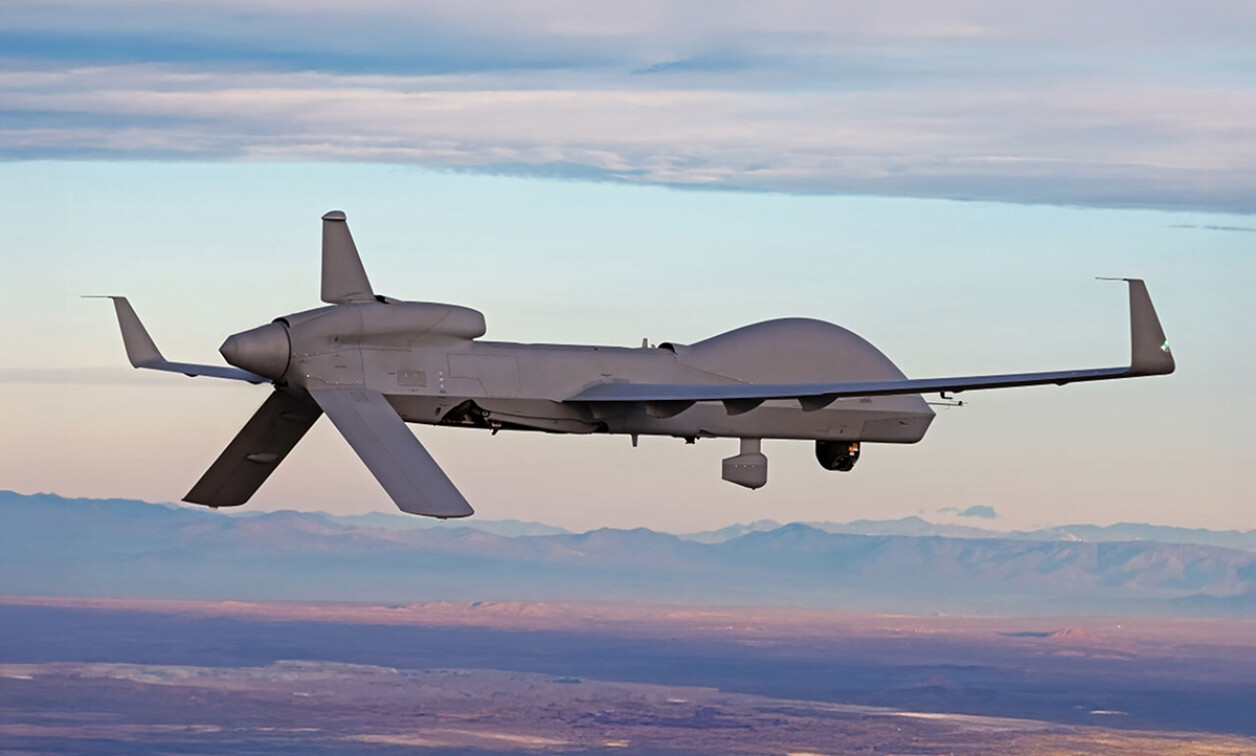
In recent years, the accelerating pace of technological advancement in both military and civilian aviation has revolutionized avionics systems development. At the heart of this revolution is the standard known as the Future Airborne Capability Environment, or FACE, Technical Standard. In tandem with the modular open systems approach (MOSA), the FACE standard is laying the foundation for modern, open software architectures for airborne platforms. The FACE Technical Standard is not just another industry standard – instead, it represents a major departure away from monolithic, proprietary systems toward more open, modular, and reusable software components.
The Future Airborne Capability Environment, or FACE, Technical Standard was developed to help overcome ongoing challenges in integrating vendor-specific avionics systems that are difficult to maintain, resulting in high operating costs and making interoperability between systems difficult to achieve. Since 2019, U.S. law requires all major defense acquisition programs (MDAPs) to adhere to modular open systems approach (MOSA) principles and while there is no equivalent legal requirement in Europe, embedding modular procurement logic into tenders is increasingly becoming a requirement for national procurement agencies in Germany, France, and Italy. Many NATO countries are currently investigating how their own national projects can align with the FACE Technical Standard. Taken together, it is clear that MOSA has laid the strategic groundwork for open, networked, and future-proof international systems while FACE alignment will provide the concrete, verifiable software architecture implementations for technical airborne systems.
Alongside the FACE Technical Standard, the Open Mission Systems (OMS) framework and the Universal Command and Control Interface (UCI) have become established in military software architectures, while also becoming increasingly important in civilian aviation. There is no content overlap between the three standards, meaning they have the capacity to complement, rather than compete, with each other. In practice, an airborne platform can be built to be aligned with the FACE Technical Standard while also still using OMS architectures and UCI data interfaces.
Technical architecture of the FACE approach
The technical architecture of the FACE Technical Standard organizes software into five distinct segments:
- Operating System Segment (OSS)
- Transport Services Segment (TSS)
- I/O Services Segment (IOS)
- Portable Components Segment (PCS)
- Platform-Specific Services Segment (PSS)
Each component connects to the overall system through defined interfaces. For instance, OSS is a component within the FACE Technical Standard that Sysgo PikeOS can implement and ELinOS (a guest OS) can run within a FACE-compliant system.
The FACE Technical Standard defines three OSS profiles that customize operating system APIs, programming languages and features, runtimes, frameworks, and graphics capabilities to support software components with various levels of priority:
- Security: Limits OS APIs to a minimal yet functional set, enabling assessment of high-assurance security functions that run as a single process.
- Safety: Less restrictive than Security, it allows only OS APIs with a proven safety-certification pedigree.
- General Purpose: The least restrictive, supporting OS APIs for both real-time deterministic and non-real-time, nondeterministic requirements, depending on the system or subsystem operation.
The Shared Data Model also plays a central role, as it serves as the semantic foundation for all messages.
The FACE Technical Standard also uses a variety of established standards, including:
- ARINC 653 (partitioning for safety)
- ARINC 661 (cockpit displays)
- POSIX APIs (portability)
- OpenGL (graphics interfaces)
- Ada, C++, Java (programming languages)
By integrating these standards, the FACE approach becomes an interoperable platform that offers high flexibility for system integration developers. This model strongly supports typed data structures and ensures that position data, sensor readings, or status information are interpreted consistently throughout the avionics system.
Implementing the FACE approach opens up new opportunities
Implementing the FACE Technical Standard is an investment that delivers lasting value. While it requires initial technical effort, the payoff can be substantial – especially for system providers working across multiple platforms or planning long-term software product strategies. By separating platform architecture from functional logic, FACE alignment unlocks true reuse and modularity, enabling proven modules to be deployed across diverse projects without costly redevelopment. Standardized interfaces streamline collaboration with partners and subcontractors, accelerating integration and reducing risk. Perhaps most importantly, FACE conformance boosts market visibility, thereby positioning manufacturers to win more business by tapping into the public registry of certified modules and responding quickly to new tender opportunities.
Alignment with the FACE Technical Standard also creates new opportunities for smaller and specialized software providers that were once shut out of large system-integration projects and unable to compete with established prime contractors. Traditionally, the complexity of integrating proprietary systems acted as a barrier, but FACE alignment removes this obstacle. By clearly separating modules from overall system responsibilities, smaller companies can concentrate on delivering well-defined software functions, have them certified, and market them independently through the FACE Registry. This approach expands market access, lowers business risk, and fosters a more competitive environment – one where quality, innovation, and interface compliance matter more than entrenched customer relationships. These dynamics are especially promising in rapidly evolving fields such as artificial intelligence (AI), sensor fusion, and real-time systems.
The FACE Registry is the gateway to visibility, credibility, and new business opportunities. Acting as a publicly accessible “app store” for military software components, it enables program managers, system integrators, and developers to quickly find and compare certified Units of Conformance (UoCs). Every component listed has passed a rigorous certification process, guaranteeing seamless interoperability within the FACE architecture. For manufacturers, the Registry is more than a directory – it’s a direct channel to market. Certified UoCs and UoC packages can be showcased to the entire defense ecosystem, opening doors to new programs, platform integrations, and partnerships. With its standardized registration process, the FACE Registry turns certification into competitive advantage, making it easier than ever for high-quality solutions to stand out and win.
Making FACE aligned offerings safe and secure
Modern avionics systems are becoming increasingly interconnected, and the shift toward software-defined platforms has made security a critical priority. While the FACE Technical Standard is not itself a security-certification authority, it incorporated mechanisms early on to address security-critical requirements. The FACE Technical Working Group’s Security Subcommittee plays a central role in this effort, developing recommendations, security profiles, and integration patterns that enable components with differing security needs to function together within a FACE compliant system.
A key focus is multilevel security (MLS), which ensures physical or logical separation of modules with different classification levels when integrated on a shared computing platform. The FACE approach also supports the integration of domain-specific security measures, such as data encryption and access control, without compromising overall system interoperability. When combined with standardized data models, these measures deliver security that meets the highest military standards, making the FACE Technical Standard equally applicable to critical infrastructure and civilian aviation systems. From a safety perspective, the FACE approach does not replace existing standards, but rather complements them. Developers of FACE aligned safety-critical software can benefit from the use of modular architectures, isolated testing techniques, and automated verification. (Figure 1.)
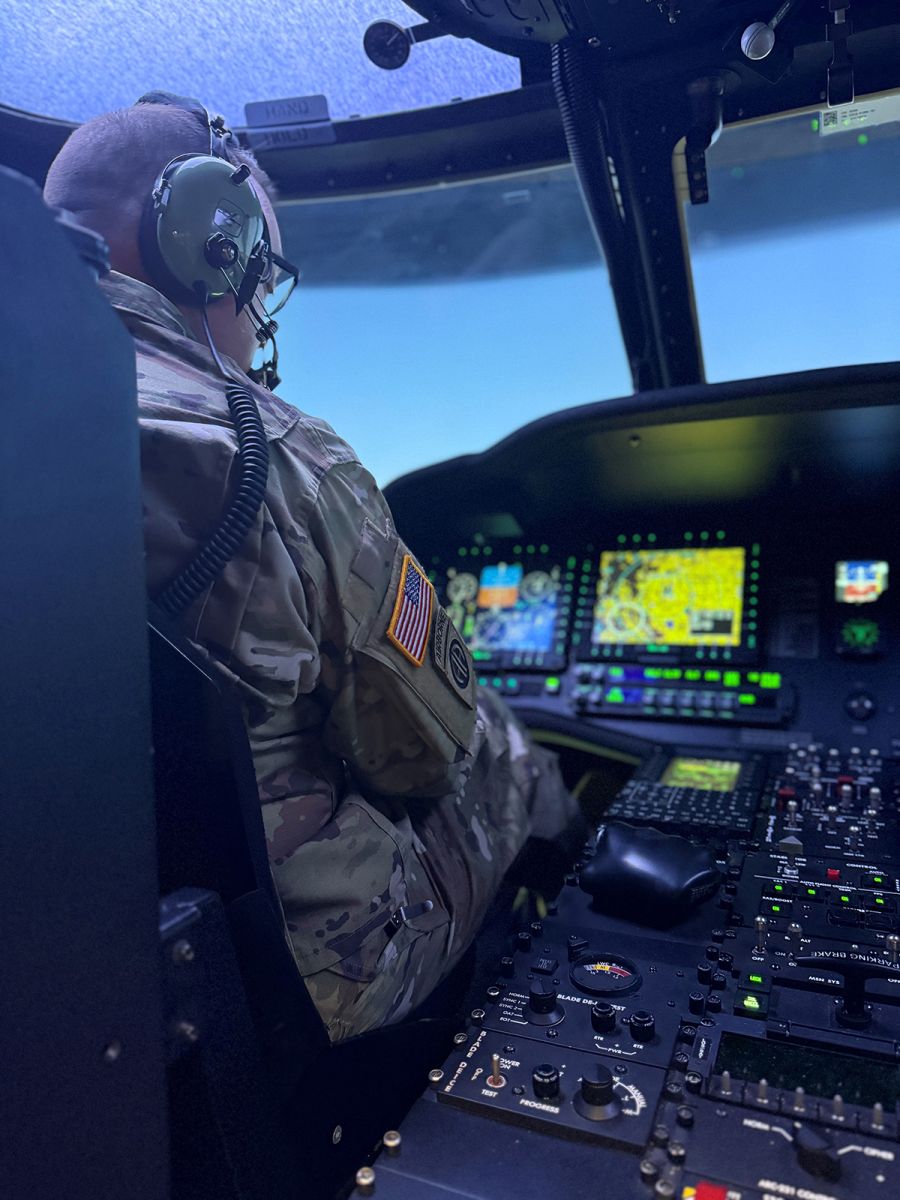
[Figure 1 ǀ Representatives from multiple Army directorates participated in the simulated environment during the Special User Evaluation for the Future Long-Range Assault Aircraft (FLRAA) program, held during spring 2025. The program provided developers with insights into how Army aviators plan and execute tactical missions using cutting-edge technology. Photo: Morgan Pattillo, Program Executive Office, Aviation.]
Developers and architects adopting the FACE Technical Standard have access to more than just specifications and testing procedures; they benefit from a broad set of open tools, documentation, and training resources. A key resource is The Open Group-supported BALSA reference project, a minimal yet functional example environment that demonstrates how to create a simple, fully FACE confromant application. BALSA can serve as an ideal starting point for custom development, backed by comprehensive guidelines for software vendors, integrators, and project managers, along with regularly updated training programs. Delivered by the consortium or accredited partners, these courses serve both technical teams and decision-makers, covering topics from architecture modeling and data description to transport service integration and middleware. This knowledge base helps projects start on the right track and avoid costly missteps.
Going forward
Conformance to the FACE Technical Standard, together with MOSA, is paving the way for a new generation of open, maintainable, cost-effective, and secure avionics systems. By aligning closely with laws, technical standards, and formal certification processes, it fosters a growing ecosystem that blends innovation with robust security. For stakeholders across both military and civilian aviation, the FACE approach represents a new paradigm in system development – modular, open, and built to stand the test of time.
Joe Richmond-Knight joined Sysgo in 2022 as an FAE/Solutions Architect. He is a member of the IET [the U.K.’s Institution of Engineering and Technology] and has a strong background in the use of embedded systems for the Internet of Things (IoT), as well as the design and implementation of complex data-acquisition systems.
Sysgo • https://www.sysgo.com/