Power under pressure: Meeting the military’s surging energy demands
StoryDecember 04, 2025


Military power systems are changing dramatically as defense platforms pack more capability into the same physical space. From artificial intelligence (AI)-driven threat detection and directed-energy weapons to swarms of autonomous drones and electric aircraft, today’s battlefield needs power in amounts that would have seemed improbable just a decade ago. At the same time, the battlefield itself is evolving: Military units are spreading across vast areas to avoid detection, which creates new challenges in getting energy to where it’s needed most. The question facing military power system designers is no longer just how to generate more power, but how to deliver it efficiently and rapidly to forces that are increasingly mobile and spread out.
The explosive growth of power-hungry technologies like artificial intelligence (AI) and electronic warfare (EW) systems is one major driver of the need for more power everywhere in the battlespace. Supporting both traditional platforms and new capabilities like uncrewed systems, places complex demands on military power system designers. Add to this the reality that many military platforms operate for decades, and the challenge becomes clear: Engineers must find ways to triple power output without changing the physical size of equipment, all while meeting strict military standards for efficiency, reliability, and survival in harsh conditions.
The defense industry’s response combines new technologies with entirely new approaches to power delivery. Advanced semiconductors, smart power conversion, improved battery designs, and mobile energy systems are transforming how military forces generate, store, and distribute electricity. Perhaps most significantly, power is evolving from a fixed support function into a tactical tool that moves with the warfighter, adapts to changing conditions, and enables mission success in contested environments where every technological advantage matters.
More power, please
One clear indication of how today’s battlefield is putting a major strain on power systems is the sheer number of platforms that need power: Electric vehicles, drones, broadband connectivity, and electric vertical takeoff and landing (eVTOL) aircraft all need substantial amounts of power.
Ron Gaw, president of Aegis Power Systems (Murphy, NC), notes “today’s military platforms are beginning to mirror the increasing power demands seen in the commercial and consumer industry, though the mission is fine-tuned to support critical energy for AI target identification, tracking, and instantaneous battlefield intelligence needs.”
The problem gets worse when you consider that many military platforms weren’t designed for these power levels. Matt Renola, senior director of global business development for aerospace and defense at Vicor Corporation (Andover, Massachusetts), explains the bind engineers face: “A lot of times the form factor is not changing. The power levels have tripled, but they’re not giving us any more room to work with.”
Increased power levels creates a heat-management problem. “Any time you’re putting more power in the same envelope, you have to deal with heat,” Renola says.
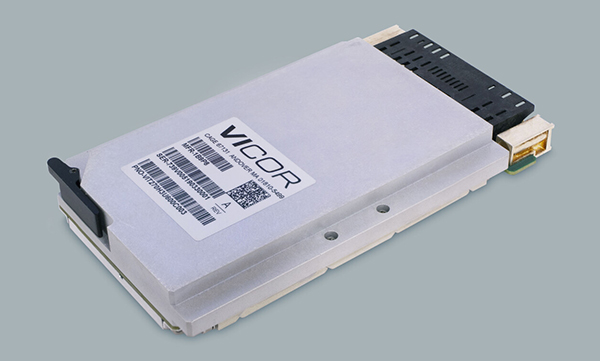
[Figure 1 | Vicor’s SOSA Power Supply is a commercial off-the-shelf (COTS) device designed for 3U OpenVPX systems that are aligned to the SOSA approach. It is targeted at avionics, shipboard applications, and other defense applications. Image via Vicor.]
Even highly efficient converters – those operating at 96.5% efficiency – still need to dissipate the remaining energy as heat, and it has to go somewhere.
The way military units now operate adds another layer of complexity: Units are dispersing across vast areas to avoid detection, which improves survivability but creates supply chain issues and power delivery problems.
Communication limitations make edge computing essential, which in turn drives up power requirements on individual platforms.
“One of the biggest issues we have right now is the limited amount of communication you can have between platforms,” says Scott Lee, senior director of sales and business development for defense, aerospace, and satellite solutions at Vicor. “And because of that, there’s a lot more of an effort to put the processing horsepower, particularly married to AI, on the individual platform.”
Designing for hostile environments
Operating in harsh or hostile environments also creates challenges for power designs. Gaw says that “while most aspects of power systems that are critical in contested environments have not changed (e.g., rugged structures and clean power), other aspects are going to take center stage at a much higher priority.”
Chief among these priorities is efficiency. “Conversion efficiency will be one of the most critical, as this will directly impact the mission length, capability and logistical support demands,” he adds.
Better efficiency does more than extend runtime: “It will also lead to lower cooling demands in critical systems, which means the parent systems themselves will see lower weight, package volume, and energy usage,” Gaw notes.
Thermal management remains a persistent concern, especially in sealed enclosures.
"A lot of these systems are boxes – these are sealed boxes with no moving air," Renola says, adding that even with a highly efficient 1,000-watt DC-to-DC converter operating at 96.5% efficiency, “you still have got to dissipate that heat. It's got to go somewhere.” Vicor has worked on solutions that involve fluid cooling and new thermal design techniques.
Gaw notes that power system designers face multiple simultaneous requirements: adaptability to a wide range of input power sources; the capability to output higher voltages and lower current as enablers for lighter overall systems; packaging the power conversion product itself in increasingly smaller, more mobile, and faster assets; and providing real-time response to changing power demand and power conversion input/output telemetry. (Figure 2.)
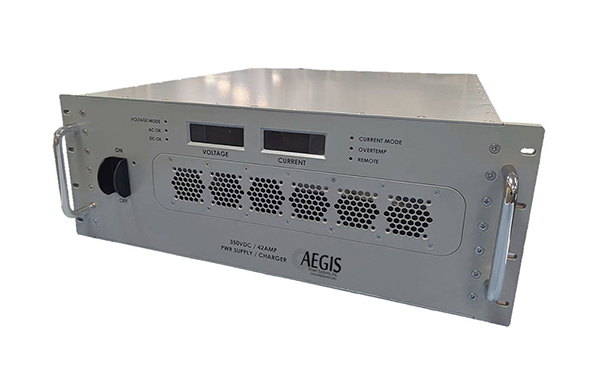
[Figure 2 | The Aegis Power Systems AP31F44017K5M is an AC-DC power converter for rackmount applications with 440VAC input, 375VDC output, and 11 kW power output. It features high efficiency, smart controls, and U.S. sourcing. Image via Aegis Power Systems.]
Wide bandgap semiconductors
Designers of military power supplies are leveraging wide bandgap semiconductors such as gallium nitride (GaN) and silicon carbide (SiC) to overcome these challenges, Renola says. “We see a lot of wide bandgap semiconductor use in the aerospace and defense market now. [They] offer higher power density, much higher frequency, lower conduction, and lower switching loss.”
The payoff goes beyond just performance specs. “The advances in all these technologies allow us to scale with the customer, to keep that same 25- to 30-year old airframe or whatever running with more advanced technologies,” he explains.
But it’s not just the technology itself – modularity and scalability are also becoming essential design principles.
The next wave
Aegis’s Gaw highlights two particularly important developments that are impacting future designs. “Intelligent power conversion that self-reports [will provide] critical operational information securely, stealthily, and in real time to enhance warrior asset awareness, reduce combat cognitive load, and enable future system assets’ awareness capabilities,” he said. The second area to watch, he believes is “technologies that will provide high-efficiency, low-signature power transfer with increased stealthy deployment options to extend unmanned mission range and capabilities.”
For its part, energy storage is evolving rapidly. “There are new battery chemistries coming out,” Renola says. “Energy storage is also one of these areas that we’re starting to see a lot of attention paid to with lithium, lithium polymer, and different types of chemistries to allow more power to be stored and held and to be used at the appropriate time.”
Higher-voltage architectures are also on the horizon; Renola notes that he’s seeing more requests for 800-volt DC systems.
Space applications are emerging as a priority. Renola says the company is talking a lot more with customers about satellite applications: “I think over the next 25 to 30 years, that’s going to be much more important than it is today.”
Power redundancy and resilience are becoming essential as threats evolve.
“The definition of ‘battlefield’ is evolving quickly, where the first wave of an aggressor’s attacks may very well be digital attacks on energy sources and of a scale not seen before,” Gaw says. “Power resiliency won’t be enough – redundancy will be a critical factor in ensuring all U.S. assets remain connected with full battlefield physical and digital capability intact.”
This evolution requires more than just hardened equipment.
“That doesn’t just mean rugged enclosures and electrical resilience; it means the capability to rapidly deploy power to anywhere, from any source to other more critical sources,” Gaw explains.
“It also means every asset is able to step in and contribute to the continuation of the mission, while delivering the mobility and stealth capabilities our warriors and their mission-critical assets have not seen before.”