U.S. Navy investing in MOSA strategies
StoryFebruary 06, 2026

The modular open systems approach (MOSA) mandated by the U.S. Department of Defense (DoD) in 2019 for all new programs and upgrades has been embraced by all the services, including the U.S. Navy, which produced a MOSA Guidebook on how and why to implement MOSA. In this interview I conducted with Jason Thomas, Systems Engineering Lead for the Department of the Navy in the Office of the Assistant Secretary of the Navy for Research, Development, Test and Engineering, at the September 2025 MOSA Industry & Government Summit, we discussed the guidebook, the current momentum of MOSA strategies, and the benefits of MOSA from a systems-engineering perspective. We also explored common misconceptions regarding MOSA, metrics for measuring MOSA success, and what Thomas would like to see from industry regarding MOSA. Edited excerpts follow.
McHALE: Can you please share your experience in the defense industry and your role and responsibilities for the Navy?
THOMAS: I’m responsible for the posture of systems engineering for all naval systems. [When] I say Navy, that’s Navy and Marine Corps, naval. The naval port-folio really looks at air, surface, subsurface, C4I [command, control, communications, computers, and intelligence] systems, land, tactical communications system. System engineering [in the Navy] encompasses MOSA [modular open systems approach] architectures and digital engineering work, and I’m responsible for ensuring our policies, procedures, and guidance are aligned and supported across all those domains.
McHALE: We are here at the MOSA Industry and Government Summit. So, let’s chat about MOSA. Why does MOSA have so much momentum in the defense community right now? How does it benefit the warfighter and how does it fit in with DoD leadership plans for acquisition reform?
THOMAS: I can’t mention or a comment in terms of policy or acquisition reform right now. I can speak to my observations and experience on this momentum shift. We’re seeing a big focus on warfighter response to rapidly evolving operational environments. Our ability to adapt quickly is directly tied to what capabilities, or modules, we can reliably field faster. Like any competition, the team that makes the right adjustments sooner and faster gives [itself] a better chance of winning. We’re seeing that with what modular open systems approaches can provide. We’re also seeing a lot of guidance from SECNAV [Secretary of the Navy], from CNO [Chief of Naval Operations], and others on this impetus and this drive for fielding capabilities faster, leveraging commercial technologies, and broadening the industrial base to leverage big primes, traditional vendors, and nontraditional vendors to really deliver what our warfighters need.
McHALE: I’ve heard discussions about a product your team is involved with in the Navy MOSA guidebook. What is the goal of the guidebook, and what are your plans for the next edition?
THOMAS: The goal of the guidebook is to really provide information to programs and some guidance where we saw a gap between what higher-level policy and intent [is], and at the execution level, “How do I do MOSA? What does that mean to me, and what do I need to consider?” Iteration 1 of the guidebook was released in January of 2025. [The guidebook was] necessary to really provide guidance to programs, PEOs, the workforce, and industry on how the DoN [Department of the Navy] is approaching MOSA implementation. The need was immediate; and our team did an incredible job coming together and delivering Version 1.
Version 2, which is set to release in early 2026, builds upon that effort and delivers more content and guidance to help programs, implement MOSA strategies, and realize what this type of approach can yield in terms of value for the warfighter and for the taxpayer.
Version 2 of the guidebook is going to include more guidance on contract language, specific information for program managers, details on the system-engineering technical reviews, acquisition gate reviews, different acquisition pathways, and [information] across the life cycle with all disciplines and domains represented to ensure that everybody can see themselves in MOSA. It’s not just for new programs or for mission systems – it shows a broad applicability and strategic approach to deliver lethal, ready warfighting capabilities.
McHALE: I’m a publisher, so I want to know: What’s your distribution [strategy] on that? Do you send it to everybody when it’s done?
THOMAS: We send to Distribution A, which is for full public distribution.
McHALE: MOSA is often talked about from a long-term, life cycle cost perspective, as it will enable more commercial innovation to leverage more quickly, thus reducing down times and upgrade costs. But what is your view of MOSA from a system-engineering perspective?
THOMAS: From my perspective, it’s really all about system engineering, and system engineering is really all about total life cycle performance and support. System engineering hits on architectures, requirements, and mission needs when and where we need them. How do we define and decompose our systems into modules or components? How do we select products or solutions that fulfill needs? How do we verify and field those functions and capabilities? Additionally, how do we insert new technologies, and how do we do all that with a bounded trade space of cost, schedule, performance (i.e. delivery need dates)? We also have to consider those elements for today as well as the evolving threat environment that we’re dealt.
So really, MOSA helps you address readiness. It helps you address lethality by inserting technologies, commercial or otherwise, faster at the point of need, when our warfighters need it. It also allows us to then take additional benefits of cost savings and other areas of reuse that we want to proliferate and promulgate elsewhere.
So again, MOSA is an approach that ties in the technical and the business aspects. What’s important for planning MOSA, or planning a MOSA strategy, is understanding your current needs of today, what may occur tomorrow, or what you’re looking at tomorrow, and what potentially may happen in the future so you can make the best decisions you can earlier, be more adjustable and adaptable.
McHALE: What are some of the common misconceptions of MOSA that you come across?
THOMAS: From my experience, it’s approach versus architecture. Architecture is a fundamental and important part of your MOSA. Your architecture helps you define the system that you’re building, the capability that you can deliver.
The approach is really everything within data rights, tech data packages, contracting strategies, and much more. What work is organic? What work [needs to] leverage commercial best-of-breed technologies? What are my refresh rates, my update rates? How do I orchestrate a strategy that fuses the business and technical pieces together to deliver an effect?
Then leveraging various standards that are out there, some that are called out explicitly, like the FACE [Future Airborne Capability Environment] and SOSA [Sensor Open Systems Architecture] Technical Standards. Those standards help us with quality. Having good standards helps you define what quality you expect of those capabilities that are being fielded. I also don’t see enough conversations integrating our procurement brethren, our sustainment brethren, into those conversations. We really have to facilitate the value and the importance and stake they have in that. It’s not solely driven by architecture or standards, or, frankly, from engineering. And I say that as an engineer. It’s truly a team effort.
McHALE: Some DoD leaders have called for more metrics on most of success to combat the naysayers. How would you describe or measure the success of a MOSA initiative?
THOMAS: Anything we do should provide value that helps the DoN advance in delivering for our sailors and Marines. One of the things I’ve noticed in conversations is the focus on cost. I’ve also heard some people talk about speed. I would suggest we focus the conversation on business value. This way it gives programs more flexibility to establish the MOSA strategy that best fits their needs, while our guidebook offers a multitude of things to consider to realize that vision.
[It starts with] understanding your value proposition for your weapon system or your system that you’re providing to the Joint Force with the DoN. Some things are legacy [and will need] to be sunset. So, it’s not smart or wise to adopt a MOSA strategy at that point. But you could still do rapid prototyping and rapid experimentation, and take advantage of those opportunities where it makes sense through those programs. They now become players that contribute at the strategic level instead of being neglected or minimized.
On the other side, if you’re a brand-new weapon system that’s being conceptualized or developed, that’s not your final state. It may be your final state when you deliver an IOC [initial operating capability], but it surely won’t be your final state. The first day after IOC, a program may start a modernization effort based on what’s been discussed or learned. You’ll have evolving threats, supply-chain issues that may arise, new technologies [that] will mature and present new opportunities, new algorithms that you want to take advantage of, and more. The program will have to pivot or adjust to meet new or evolving needs; some things were planned for while others were unforeseen. Systems engineers must consider these things for any system they support.
All that work, all that activity to produce a product and value still requires time and investment of resources to deliver. Having MOSA up front and early allows you to shorten those later evolutions and later activities. [Let’s say] your development for your acquisition program from conceptual to IOC is 10 years. Then you have an engineering exchange proposal, a modernization effort that’s going to be five years from the time that you define it and release a contract or RFI to when it’s fielded. That’s [now] 15 years from the start. If your MOSA is baked in early, potentially your modernization is going to be fielded at year 12 or year 13, or earlier if you can pivot before IOC. So, how we look at time has to be really well-understood in its totality. Same thing with budgets, cost, personnel, and skill sets.
Once we understand really the full life cycle and the full totality of what we’re talking about in terms of a MOSA, then you can start looking at those modules of activity, modules of work, modules of progress, modules of capability differently, and start decomposing and saying, where do I really get efficiencies? And that’s for a single program. When you start looking at portfolios and larger strategic efforts, you can get significant return in terms of data, sharing, testing, a myriad of other benefits on development, fielding, potentially again, defense industrial base, with other sources of repair, other sources of material that you don’t necessarily focus on or think about as a single program manager for a single program.
McHALE: How do you look to further industry engagement and feedback for what you do at the Navy?
THOMAS: How do we become better partners in a multitude of areas: For example, in IP, data rights, technical data packages, different options for only releasing an RFI or an RFP. We (the government) may have something in our mind, predisposed to belief, structure, or approach that worked in the past, or didn’t work in the past. We may just not know any better that’s where we want to have better engagements and learn.
If there’s better approaches that are out there that we can take advantage of, different designs, different architectures, different technology, different business strategies, incentive structures, that may appear we’re not in alignment with industry, but it’s only because we’re not informed. Help us understand better what we can do on that front. That’s just my personal opinion.
McHALE: Looking forward, how do you see MOSA impacting DoD procurement five years from now, or even longer? Predict the future.
THOMAS: I think, between the high-level defense guidance that we’re all seeing, the priorities that are out there, the evolving threat environment, the economic landscape, all things that are happening globally, I think MOSA is going to be a key enabler to help address what the warfighter response is, as well as humanitarian responses to those activities that may occur.
But if we all look at it and say, I want a new app on my phone, okay, here you go. Now, I have different options for weather apps or finding a parking spot, or whatever it is, I have different opportunities. Why? Because of the standards that help you build to a particular capability or expectation, set of expectations, that you're looking for. It’s the business and technical sides coming together seamlessly.
I think MOSA is a foundation of building blocks for all that we want to do going forward to be adaptable, responsive, lethal, and that strengthen the industrial base. It truly is a strategic imperative.
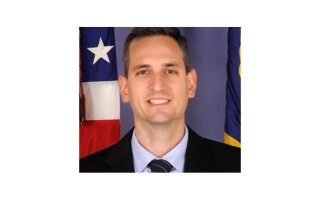
Jason Thomas is Systems Engineering Lead for the Department of the Navy in the Office of the Assistant Secretary of the Navy for Research, Development, Test and Engineering.