
GUEST BLOG: Space resilience is critical. So why are satellites still so exposed?
BlogApril 28, 2026

Dr. Jean-Francois Morizur
Cailabs

Dr. Robert Brüll
FibreCoat
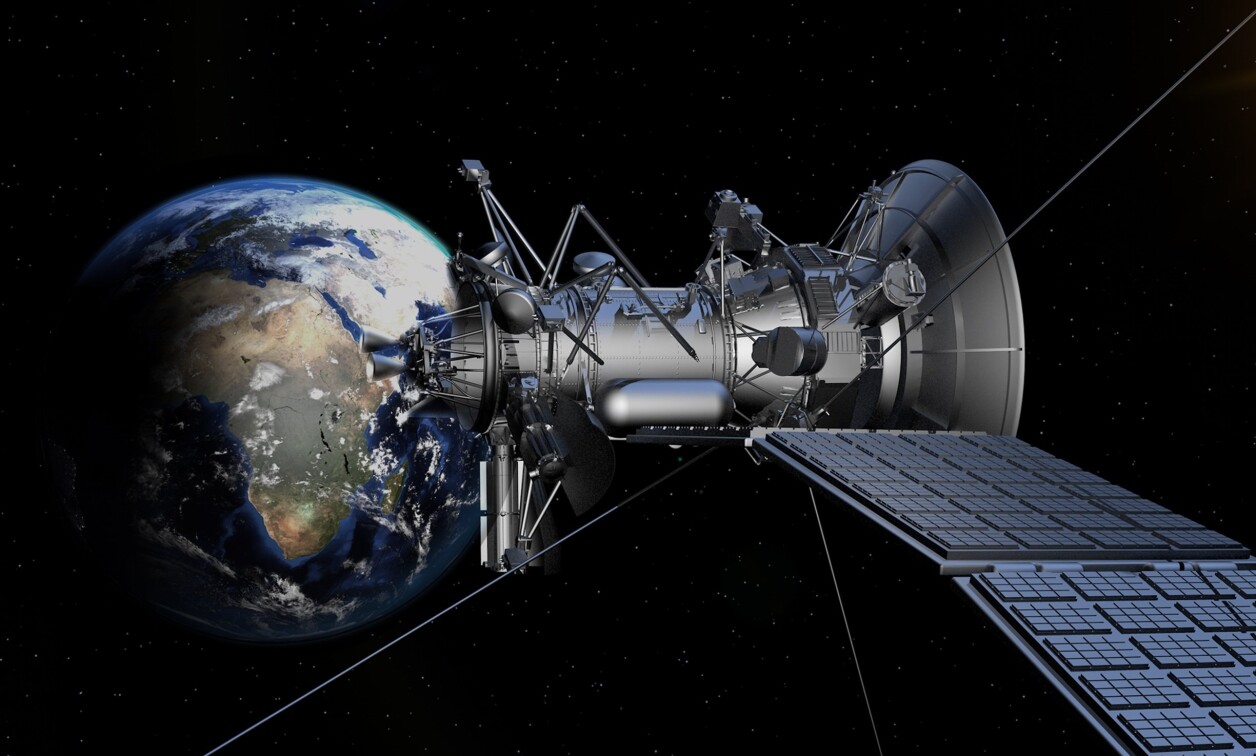
Only recently, Iran jammed satellite internet signals to restrict access inside its own borders, while Russia has constantly interfered with satellite broadcasts that support Ukraine – these are just some of the more visible demonstrations of the fact that space systems can be disrupted and that they are considered targets in modern conflict.
Satellites do not float above geopolitics; they carry military communications and synchronize financial networks through precise timing; support shipping, aviation, and emergency response; connect civilians to the internet. Interfering with these systems means disrupting specific, measurable functions on the ground. Indeed, this is why Elon Musk’s decision to deny Russian forces access to unauthorized Starlink terminals in occupied Ukraine has had such a major effect. Yet our own space infrastructure remains more exposed than many policymakers will admit.
Uncertainty complicates things. Space is by nature a harsh operating environment, one in which radiation degrades electronics, solar storms induce damaging currents – as they did during the 1989 event that disrupted Quebec’s power grid – and micrometeorites travel at speeds that can puncture spacecraft shielding. Space systems also fail for ordinary, boring technical reasons, as they do on Earth. When a satellite malfunctions, therefore, engineers must decide whether radiation, debris, software error, or deliberate interference is responsible, and politicians are often forced to address events before that analysis is complete. If they treat a technical failure as an attack, they risk an unnecessary escalation; if they assume accident where in fact there was intent, they can look like a soft touch.
How should industry approach the issue of satellite resilience? First, start with the architecture. For decades, we built space systems around a handful of large, high-value satellites. These platforms may perform well, but they concentrate risk. An adversary doesn’t need to disable many assets to cause disruption; it only needs to target a few critical ones. A distributed fleet of smaller satellites spreads risk across dozens or hundreds of nodes. If one fails or is interfered with, others can take over its workload and maintain service. Network engineers and cybersecurity professionals already design terrestrial systems this way because redundancy limits damage and speeds recovery. Space programs should adopt the same logic as standard practice rather than as an exception.
Next: The industry should also avoid single points of failure in design and procurement. Building many identical satellites cuts cost and eases maintenance, but it creates uniform fleets. If every spacecraft relies on the same processor, software, or power unit, one flaw can ground the whole constellation. A more robust approach is to keep common technical standards for interoperability while sourcing key components from different suppliers with separate supply chains.
Clear standards, like those long used in the military to ensure equipment works together, enable systems to connect and compete on equal terms. Settled standards also lower the barrier to entry for younger firms that may have better ideas but a weaker or nonexistent record. Using qualified parts limits the risk that one defect spreads across the system and in fact speeds the adoption of new solutions.
The industry should also make parts tougher, and we should be quicker about it. Space exposes electronics to constant radiation and electromagnetic interference, as both can disrupt signals or damage parts. We know how to reduce that risk. Engineers can use shielding, conductive coatings, and composite materials; select radiation-tolerant components; and design circuits that keep working when one element fails.
Although these steps raise upfront costs, they sharply reduce the chance that a brief fault becomes a total loss in space. The real obstacle is in fact not physics but caution. We do not need years of flight heritage for every advance if a material or system meets clear standards on Earth. Faster testing, clearer thresholds, and shorter approval cycles would move proven solutions into orbit sooner. Toughness must be designed in from the start; but resilience also depends on speed. An infrastructure that evolves quickly is harder to disrupt than one that waits for perfection.
Also needed: backup communication paths. Most satellite links still rely on radio frequencies, and their signals can be jammed or intercepted with the right equipment. Optical links provide an alternative. Laser communication between ground stations and satellites, or between satellites themselves, uses narrow beams that are harder to detect and disrupt. They also carry more data at higher speeds. If interference affects one channel, traffic can shift to another channel and service can continue. This is not duplication for its own sake – it is a thoroughly practical way to reduce vulnerability and maintain continuity under pressure.
Let us be clear: None of these measures eliminates risk. Space will remain difficult to operate in, and states will continue to test each other’s systems. But resilience affects behavior. An adversary is far less likely to interfere if it knows it cannot cause serious damage with limited effort. A government is less likely to escalate if it knows that one failure does not mean it has lost the entire service. Systems that can absorb disruption reduce vulnerability and lower the pressure to respond quickly and forcefully.
For years, space policy has focused on growth: more launches, more satellites, more services. That expansion has delivered real benefits. But protection has not kept pace. Satellites, as we have said, now support defense operations, financial transactions, navigation, weather forecasting, and emergency response. When these systems fail, the effects reach well beyond the space sector. Protecting them is therefore not a niche technical issue; it is a central national-security responsibility.
Cailabs · https://www.cailabs.com/ FibreCoat · https://fibrecoat.de/