From concept to capability to compliance: Making MOSA work in avionics
StoryMay 07, 2026

Paul Maguire
Knowmadics
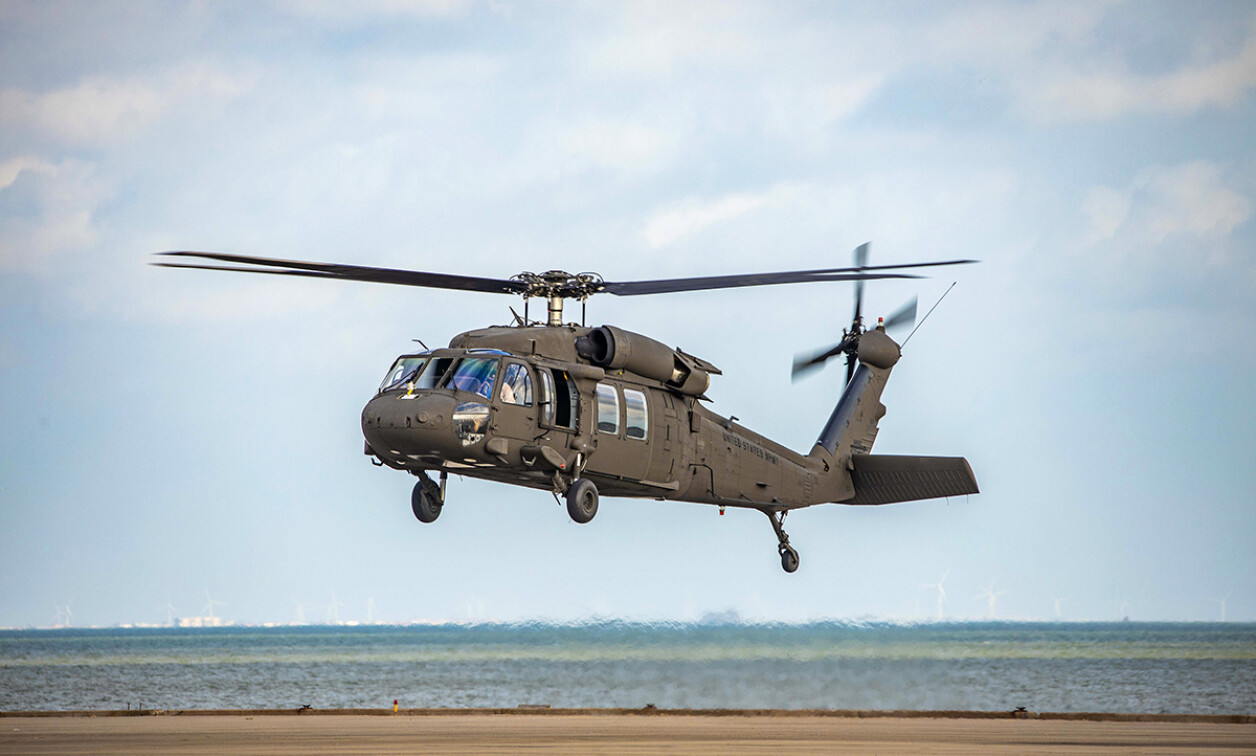
As artificial intelligence (AI), autonomy, and software-defined systems continue to drive defense equipment requirements at the tactical edge, the emphasis shifts from defining standards to executing against them. Aligning certification approaches, integration practices, and hardware strategies will ultimately determine how effectively the modular open systems approach (MOSA) delivers on its promise.
The ability to translate requirements into deployable capability remains a central objective for modern defense systems, particularly in avionics. The goals of the modular open systems approach (MOSA) are well established in U.S. Department of Defense (DoD) guidance, yet delivery has lagged. Programs often meet the letter of MOSA compliance without realizing the operational agility it was intended to enable.
This gap is not a failure of the concept, but a reflection of how MOSA is currently being implemented and incentivized. Certification regimes, acquisition timelines, and vendor business models are still largely optimized for stability and control over rapid integration and interoperability. These challenges have also been highlighted in recent Government Accountability Office (GAO) reviews of MOSA implementation.
Knowledge of these hurdles should not lead the defense community to abandon MOSA, however, as its potential cost savings, innovation velocity, and tactical-edge capability gains remain too significant. The path forward is not to abandon MOSA, but rather to align execution with intent.
Key friction points in MOSA based avionics architectures
MOSA was designed to unlock innovation, enabling plug-and-play integration and an environment in which the DoD could swap sensors, processors, and software with minimal disruption.
This expectation has been reinforced through formal acquisition mandates across DoD programs. The reality of 2026 is more sobering: While MOSA has provided key elements of the necessary scaffolding for modernizing military forces, a gap remains between the promise of modularity and the delivery of deployable capability. This mismatch is not a failure of the standards themselves, but a collision between the goal of open architecture and the friction of military industrial realities.
Certification and airworthiness constraints
The primary friction point is the certification and airworthiness regime. Military avionics are governed by safety standards (e.g., DO-178C for software and DO-254 for hardware) that do not care about modularity. When a vendor swaps a card in an OpenVPX (modular embedded computing standard) chassis or updates a software module in a FACE, or Future Airborne Capability Environment, conformant environment, the speed advantage often hits a wall.
Current protocols frequently demand a full system recertification for even minor modular changes. Innovation cycles at the tactical edge are now measured in months, driven by rapid advancements in commercial silicon and AI, yet certification cycles remain measured in years.
What’s the limit of open in multivendor architectures?
Recent cuts to DoD Operational Test and Evaluation (OT&E) programs have only exacerbated this disconnect. Without a committed, well-funded effort to shorten the cycle between concept and capability, MOSA enabled systems remain constrained by certification and integration timelines.
At the same time, MOSA implementations do not always achieve the level of openness the architecture is intended to enable. Common issues include vendor-controlled middleware, incomplete interface documentation, and closed development toolchains. A platform may be MOSA compliant on paper, but if the primary integrator holds the keys to the APIs and data schemas, the government is still locked into a proprietary ecosystem.
This lack of true transparency hinders the sensor-to-shooter pipeline, as data integrity at the tactical edge depends on the seamless flow of information between disparate modules. If those modules are communicating through proprietary black box middleware, the speed of the kill chain is dictated by the slowest vendor’s willingness to share.
Performance at the tactical edge
Performance introduces another constraint at the tactical edge. Mission-critical systems require extremely low latency, high compute density, and tight timing synchronization. Standards like FACE and SOSA, or Sensor Open Systems Architecture, were designed for interoperability, but abstraction layers and middleware introduce overhead.
In a high-intensity conflict, latency directly impacts mission performance in systems such as electronic warfare (EW) and autonomous flight control. There is a persistent tension between the desire for a clean, modular abstraction and the raw, bare-metal performance required for survival.
The corrective is operator-anchored engineering, which is design validated through the operators who will depend on these systems in contested environments, not abstracted away from them.
Hardware refresh cycles versus commercial compute
Hardware cycles present a related challenge. While OpenVPX and the SOSA Technical Standard have succeeded in creating a modular hardware footprint, they do struggle to keep pace with the rapid evolution of AI accelerators and GPUs.
Commercial compute cycles move every 12 to 18 months, while military qualification cycles can extend to a decade. By the time a MOSA compliant ruggedized chassis is fielded, the processing power inside is often three generations behind the latest version. This lag can result in architectures materially behind the pace of commercial innovation and critical edge capabilities (e.g., AI-driven autonomy and automated EW). Addressing this gap requires a hardware framework that better accommodates heterogeneous architectures and can be refreshed at the speed of the commercial market.
Integration burden in distributed architectures
MOSA changes how integration risk is distributed. In a traditional proprietary build, the prime contractor owned the risk of making everything work together. In a MOSA world, integration responsibilities often shift upward to government program offices or system integrators.
This difference leads to higher systems-engineering burdens, more complex interface management and configuration control, and versioning challenges across modules from multiple vendors. These challenges reflect the complexity inherent in modular systems. Modularity does not eliminate complexity, but rather redistributes it. Without a more robust approach to systems integration – one grounded in common data contracts, shared engineering standards, and platform patterns rather than platform projects – the industry may find that complexity shifts rather than disappears.
Cybersecurity in open systems
Security must be built into MOSA architectures from the start. Open interfaces inherently increase the attack surface, which introduces additional risk. In tactical environments, validating third-party modules and securing firmware update chains is complex and resource-intensive.
At the same time, maintaining cybersecurity compliance across a multivendor ecosystem can be just as challenging and time-consuming as achieving airworthiness certification.
Where MOSA is delivering measurable gains
Despite these challenges, it would be a mistake to view MOSA as a failed experiment. There are meaningful successes, with industry and government leaders pointing to measurable progress. Programs adopting OpenVPX and the SOSA approach are seeing faster incremental refreshes for mission computers at the edge.
Small, innovative technology firms that were previously locked out of major platforms-acquisition efforts are now able to contribute specific modules. Additionally, multidomain convergence architectures are beginning to demonstrate how reusable capability libraries can accelerate delivery across complex and markedly different technical domains simultaneously.
Software reuse is also becoming a reality. Initiatives like the FACE Technical Standard have enabled mission-critical code to be ported across platforms with substantially lower effort than in the past. These are early indicators of a more agile defense industrial base.
What needs to change
Realizing the full value of MOSA in avionics depends less on defining new standards and more on how those standards are implemented in practice.
Programs must move beyond compliance as an endpoint and instead treat interoperability as something that must be demonstrated and sustained. This mindset starts with complete and accessible interface definitions – data schemas, APIs, and documentation that enable integration without reliance on a single vendor.
At the same time, certification approaches need to evolve alongside the architecture. Separating safety-critical avionics functions from rapidly evolving mission applications enables software to be updated without triggering full system recertification, which can preserve both safety and speed.
Integration must also shift from a late-stage activity to a continuous discipline. Shared integration environments can provide a common space for validating modules early and often, which reduces downstream risk and improves alignment across vendors.
Finally, hardware strategies must better reflect the pace of commercial innovation. Enabling more frequent insertion of new computer technologies, particularly for AI and autonomy workloads, will be essential to maintaining capability at the tactical edge.
From architecture to execution
MOSA has established a viable foundation for modular, interoperable avionics systems. The challenge now is ensuring this architecture translates into deployable capability at the pace required by the operational environment. As AI, autonomy, and software-defined systems continue to drive requirements at the tactical edge, the emphasis shifts from defining standards to executing against them. Aligning certification approaches, integration practices, and hardware strategies will ultimately determine how effectively MOSA delivers on its promise.
Paul Maguire is CEO and co-founder of Knowmadics, where he leads the development of secure, mission-critical technologies for defense and space-based systems. He is a former naval intelligence officer specializing in space and tracking solutions. He has contributed to next-generation national-security and public safety solutions and co-authored work on multispectral imagery and advanced imagery exploitation.
Knowmadics https://knowmadics.com/