Radar testing in an increasingly contested environment
StorySeptember 03, 2025

Haydn Nelson
Emerson

Radar systems are critical for situational awareness, threat detection, and tracking, and their mission only becomes more challenging with time. In today’s congested and contested electromagnetic spectrum, systems must contend with dense signal environments, deliberate interference, and deceptive transmissions, all while evolving toward greater adaptivity, agility, and resilience. Keeping pace with these advancements requires equally sophisticated validation and test strategies.
Radar development for military use is increasingly focused on integration, adaptability, and software-defined operation. Many systems now combine radar, communications, and electronic warfare (EW) into a single radio-frequency (RF) front end, expanding capability while also introducing new layers of complexity. Cognitive radar architectures are also gaining ground, using machine learning (ML) to adjust waveforms, optimize beamforming, and avoid interference in real time. Advances in digital programmable arrays, such as active electronically scanned arrays (AESAs), are enabling finer spatial control and greater agility. These designs introduce new requirements for precise synchronization across wide bandwidths and densely populated signal channels.
These innovations pose definite hurdles for validation and test. Modern radar systems must perform reliably across a broad set of conditions, including rapidly changing signals, fluctuating spectrum access, and environments where signals may be ambiguous or deliberately deceptive.
Simultaneously, development cycles are accelerating. Test teams are now expected to verify more functionality across a wider range of mission scenarios, all within shorter timeframes. This shift is driving the need for flexible, programmable test environments that can accurately simulate dense RF activity and adapt to evolving system requirements.
Effective radar testing today depends not only on high signal fidelity, but also on the ability to respond in real time. Systems must support precise control over timing, Doppler effects, and signal amplitude in order to evaluate behaviors such as target discrimination, agile beam steering, and interference rejection under realistic conditions.
The modern RF battlespace
Electromagnetic spectrum operations (EMSO) have expanded the threat landscape from physical platforms to signal-level activities. In this domain, radar systems must detect, track, and classify targets while navigating jamming, spoofing, and spectrum denial.
Testing in this context brings new challenges that reflect the contested and rapidly evolving environment of the RF spectrum. Radar systems are expected to maintain performance amid dense signal congestion, where military and commercial emitters operate in close spectral proximity. They must also withstand intentional interference, including adaptive jamming techniques that can evolve and change during operation. As spectrum use becomes more dynamic, systems need to switch frequencies, modulate waveforms, and reconfigure beams on extremely short timelines, often within a few milliseconds. Validating these behaviors requires test setups that can generate and manage multiple RF signals at once, while keeping precise control over timing and signal characteristics.
These conditions are difficult to replicate in traditional test environments. Over-the-air (OTA) testing and open-air ranges offer realism but lack repeatability and control. Chamber-based or hardware-in-the-loop (HIL) setups offer isolation and precision but require flexible instrumentation capable of real-time emulation.
Meeting these demands calls for a shift in how radar testing is approached. Modern test environments must be built on modular systems that use reconfigurable signal transceivers, wideband RF inputs and outputs, and open software interfaces. This combination enables test engineers to model evolving spectrum threats, inject interference with precision, and observe system responses under repeatable, high-fidelity conditions that support both validation and iterative development.
Radar testing must evolve
As radar systems continue to evolve in both architecture and function, test environments must keep pace and offer faster, more repeatable validation across a growing range of mission conditions.
Among the growing set of challenges is the need to verify the performance of AESAs. Testing these systems often requires over-the-air configurations that can evaluate beam agility, sidelobe behavior, and scan patterns under realistic conditions. These scenarios typically rely on chamber-based or near-field setups, which offer both RF realism and the measurement consistency needed for repeatable results.
At the same time, radar designs are expanding to include wider bandwidths and higher channel counts. This growth leads to a sharp increase in data volume, which places greater strain on acquisition systems, storage, and post-processing pipelines. High-throughput architectures and real-time analysis tools are becoming essential to keep pace and avoid bottlenecks in technology advancements.
Test environments must also support fast iteration. Schedule pressures extend beyond development to production and sustainment phases, where automation, integrated calibration, and low manual overhead are key to maintaining both speed and accuracy.
The increased use of commercial off-the-shelf components and FPGA [field-programmable gate array]-based signal chains adds another layer of complexity. These elements can introduce variability in latency, noise performance, and spectral behavior. As a result, it becomes critical to characterize subassemblies not just in isolation, but as part of the full radar system. This step is especially important late in the development cycle, when integration and design changes are still underway.
Flexibility first
Legacy test systems were often built for specific radar models, waveform types, or frequency bands. While these approaches worked well for earlier generations, they struggle to keep up with the demands of today’s rapidly evolving radar designs and expanded mission scopes.
A more effective strategy embraces a platform-based, software-defined, and modular architecture. This approach allows test systems to adapt alongside radar development without requiring full hardware replacements. Key features include the ability to generate real-time scenarios that inject targets with dynamic delays, Doppler shifts, and attenuation profiles, accurately replicating real-world conditions. Modular signal transceivers provide coverage across wide bandwidths and frequency ranges, while scalable channel counts support increasingly complex systems. (Figure 1.)
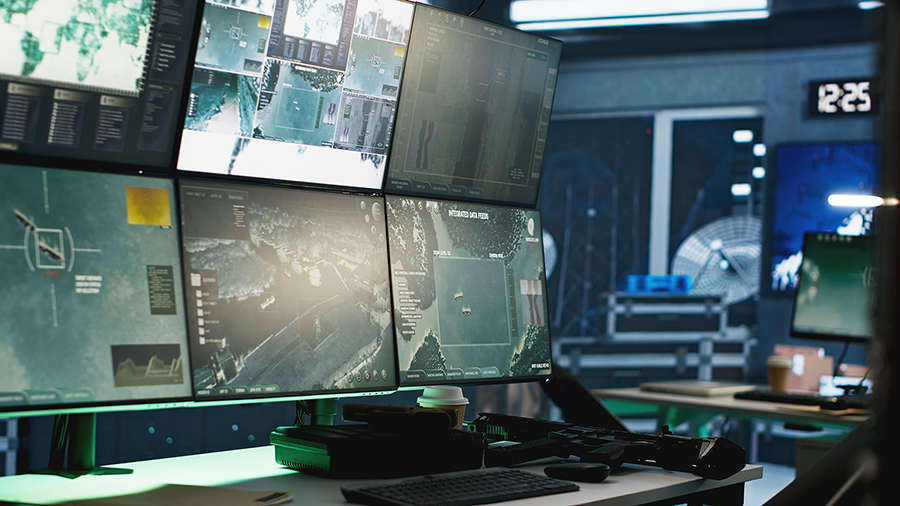
[Figure 1 ǀ Today’s rapidly evolving radar designs and expanded mission scopes calls for flexible, upgradable, and modular testing architectures. Stock image.]
Open software interfaces enable integration with digital twins, scenario generators, and mission-modeling frameworks. At the same time, calibrated and synchronized signal paths ensure the precision needed for time-sensitive measurements such as range delay and phase coherence.
This flexible architecture supports early prototyping, closed-loop testing, and continuous validation throughout design, production, and life cycle sustainment. When implemented effectively, it enables radar developers and test engineers to work in parallel, speeding time to deployment and improving confidence in system performance under the challenging conditions typical of EMSOs.
Preparing for what will come
Radar systems will continue to evolve in step with the changing RF battlespace. In 2025 and beyond, radar test goes beyond simple validation to encompass simulation, emulation, and adaptive response. The increasing complexity of multifunction RF systems calls for test environments that are scalable and capable of keeping pace with the speed and complexity of the systems themselves.
Meeting these challenges depends on test platforms that support mission-specific workflows, real-time scenario generation, and precise signal control. Moving away from fixed, hardware-centric setups toward modular and programmable architectures enables development teams to accelerate innovation while maintaining signal realism and measurement accuracy.
As the spectrum contest intensifies, the ability to test radar systems under realistic, large-scale conditions with confidence will be critical to maintaining readiness and resilience.
Haydn Nelson is a U.S. Navy veteran with more than 20 years of experience in wireless and DSP technology applications. He has worked in several industries – from military and aerospace research to RF semiconductor test – and has broad experience in radar/EW and communications systems. Haydn currently serves as a business development manager at Emerson Test and Measurement for its wireless prototyping and deployment applications in military and aerospace markets.
Emerson Test and Measurement www.ni.com/radarew