Open standards helping to future-proof UAVs
StoryMay 07, 2026

Flemming Christensen
Sundance Multiprocessor Technology
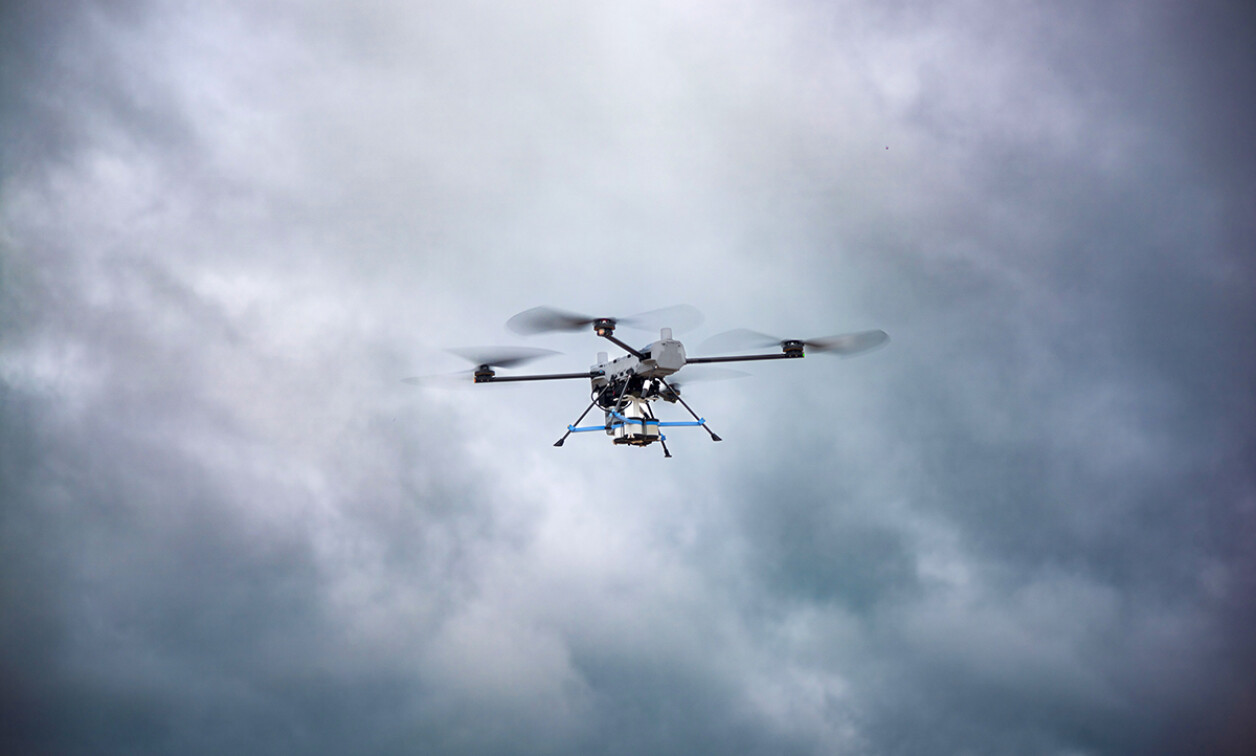
Uncrewed systems are evolving rapidly, from attritable one-way drones to high-end intelligence, surveillance, and reconnaissance (ISR) platforms. Each class demands a different embedded architecture strategy. Open standards such as OpenVPX and VNX+ provide a modular foundation to future-proof them all.
Unmanned aerial vehicles (UAVs) such as drones, are increasingly important in modern defense systems. However, they impose significant demands on system design, requiring higher computing performance and rugged hardware platforms while imposing strict size, weight, power, and cost (SWaP-C) constraints.
Military platforms also often remain in service for years – even decades – in contrast to fast-moving consumer-electronic products. In contrast, sensors, artificial
intelligence (AI) algorithms, and communications technologies evolve in much shorter innovation cycles, which creates fundamental tension between platform longevity and rapid technological advancement.
MOSA, SOSA, and STICS: The shift toward modular defense architectures
While the defense industry has long relied on monolithic, proprietary system architectures, it is currently undergoing a transition toward open, modular, and standardized platforms.
A key driver of this shift, particularly in the U.S., is the modular open systems approach (MOSA) mandate from the U.S. military. From the outset, the MOSA mandate required that new systems be designed featuring modular architecture and clearly defined interfaces based on established open standards. The objective is to align rapid technological innovation cycles with the significantly longer service lifetimes of deployed military equipment. In parallel, the Sensor Open Systems Architecture, or SOSA, Technical Standard provides a technical framework for interoperable and plug-in subsystems. The SOSA standard translates MOSA principles into concrete hardware- and backplane-level specifications, thereby establishing a multivendor foundation for high-performance embedded systems.
In the U.K., the Standards for Integrated C5ISR/EW Systems (STICS) approach pursues similar goals. The STICS framework likewise emphasizes interoperability, vendor independence, and accelerated technology-refresh cycles. STICS also aligns with open architectural principles and is compatible with the SOSA approach in many areas.
Together, these initiatives promote a building-block approach in which compute, I/O, and networking modules can be exchanged as needed. Strategically, both enable better control of life cycle costs, reduce the risk of obsolescence, and support faster upgrades without requiring complete system redesign.
OpenVPX and VNX+: technical foundations for rugged embedded architectures
In recent years, OpenVPX, developed by the VITA standards organization, has established itself as a key standard for open, modular, rugged, and high-performance embedded computing in the defense sector. Building on the earlier VPX technology, OpenVPX introduces enhanced capabilities with clearly defined backplane profiles, plug-in modules, power-supply units, and connectivity options. The standard enables interoperability across multiple vendors while supporting high data rates, deterministic latency, and scalable system architectures.
A major advantage of OpenVPX is flexibility:
- Different slot profiles and topologies enable systems to be tailored to a wide range of mission requirements, from sensor fusion and electronic warfare (EW) to AI-driven, real-time data processing.
- At the same time, the OpenVPX standard addresses the demands of harsh operational environments through mechanical robustness, secure connectors, and efficient thermal management.
- Air- and conduction-cooled implementation ensures reliable operation under extreme temperature, vibration, and shock conditions that UAVs and manned platforms often encounter.
VNX+ extends this approach to more compact, SWaP-optimized systems, as it enables higher performance density while reducing overall footprint. Its backplane-based architecture also enables modular replacement of processors, FPGA [field-programmable gate array], or I/O populated cards, making it easier to adapt systems to increasing bandwidth requirements, new sensors, or modern AI workloads. While OpenVPX addresses the highest performance requirements in larger platforms, VNX+ enables powerful modular embedded systems in more compact, SWaP-sensitive environments.
One-way systems
Attritable UAVs, often referred to as one-way systems, represent a new generation of cost-sensitive tactical platforms. Unlike traditional military aircraft systems, they are not designed primarily for long-term reusability or maximum survivability, but rather for rapid availability, low per-unit cost, and scalable production. Their operational concept follows a “launch and forget” principle: easy to procure or build, quick to deploy, and ultimately expendable.
Architecturally, the one-way class is dominated by heavily SWaP-optimized commercial off-the-shelf (COTS) components. Entry-level systems frequently rely on commercial single-board computers (SBCs) such as the Raspberry Pi, which, despite its low cost, provides sufficient computing power for basic navigation, communications, or image-processing tasks. More capable variants integrate system-on-chip (SoC)- or FPGA-based platforms such as AMD Zynq solutions. For example, the Sundance VCS³ (Figure 1) or NVIDIA Jetson modules enable additional AI and edge-processing capabilities without fundamentally altering the overall cost structure.
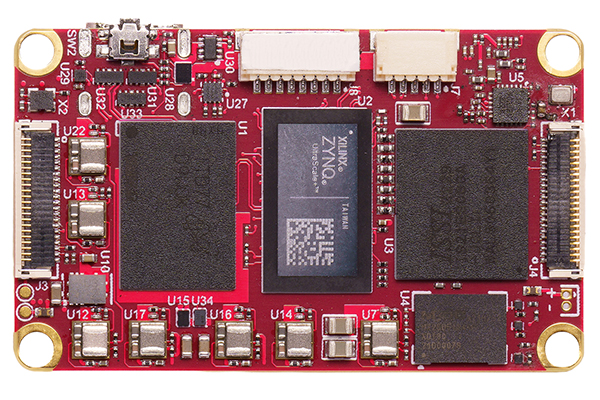
[Figure 1 ǀ The Sundance VCS3 single-board computer, based on AMD Zynq MPSoC, is a low-power module for vision, control, and sensor Solutions. Figure courtesy Sundance.]
These systems are typically complemented with low-cost commercial add-on modules such as GPS receivers, GSM communication modules, or compact radar altimeters like the Ainstein US-D1 (Figure 2). Their goal is to promote functionality with minimal integration effort. Standardized interfaces and pragmatic system integration take priority over maximum redundancy or complex mission architectures.
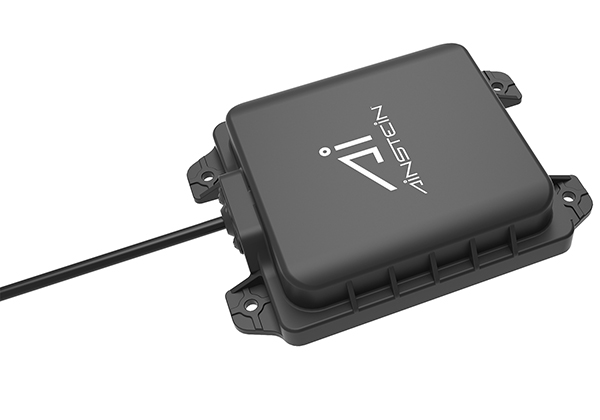
[Figure 2 ǀ The Ainstein US-D1 is a small-form-factor radar altimeter that reports reliable measurements up to 50 m, suited for use in UAV or drone applications. Figure courtesy Ainstein.]
Recoverable tactical systems
Recoverable tactical systems, also called return-capable tactical UAVs, represent, technologically, the middle tier between cost-sensitive attritable systems and high-end strategic platforms. Unlike one-way systems, these recoverables are designed to complete their mission and safely return to base or to a designated recovery point. As a result, they face significantly higher requirements in terms of autonomy, navigation accuracy, computing performance, and overall system robustness.
These platforms are generally larger and more capable than attritable UAVs and thereby enable expanded mission functionality. Functionality can include AI-supported target recognition; adaptive flight-path planning; obstacle avoidance; and secure, jam-resistant communication links. Components such as tactical routers or encrypted data links enable integration into higher-level command and control networks. At the same time, these systems must be sufficiently robust against vibration, temperature fluctuation, and electromagnetic interference, as they repeatedly operate under demanding mission conditions.
From an architectural perspective, demanding expanded missions create a need for modular, backplane-based solutions with higher performance density; VNX+ precisely addresses such requirements. The VNX+ architecture enables scalable integration of high-performance processor or FPGA cards and specialized I/O modules within a compact and rugged system. Thanks to its modular structure, it’s possible to replace or expand compute units, accelerators or interfaces as mission requirements evolve, without requiring complete system redesign.
High-end ISR and armed platforms
High-end intelligence, surveillance, and reconnaissance (ISR) and armed UAVs represent the top performance tier of uncrewed aerial systems. In terms of size, range, and mission profile, these platforms are often comparable to manned aircraft or helicopters. Designed for complex, long-duration operations, they carry a wide array of advanced sensors, communication systems, EW components, and – depending on the mission – weapon systems.
Accordingly, demands on the embedded architecture are substantial. In addition to significant computing power for real-time sensor fusion, image processing and signal processing, these systems must also support redundant avionics architectures, secure data links and deterministic communication frameworks. Processing large volumes of data from radar, electro-optical/infrared (EO/IR), SIGINT, or EW systems requires scalable high-speed data paths as well as powerful processor-, GPU-, or FPGA-based accelerator cards.
Larger platform dimensions allow greater SWaP margins compared to smaller tactical systems, enabling the deployment of modular 3U or 6U OpenVPX systems that combine high performance density with standardized interfaces and defined backplane topologies. (Figure 3.) In this context, OpenVPX provides a structured foundation for multivendor interoperability, clearly defined slot profiles, and robust mechanical and thermal design concepts, all of which are critical for operation under demanding flight and environmental conditions.
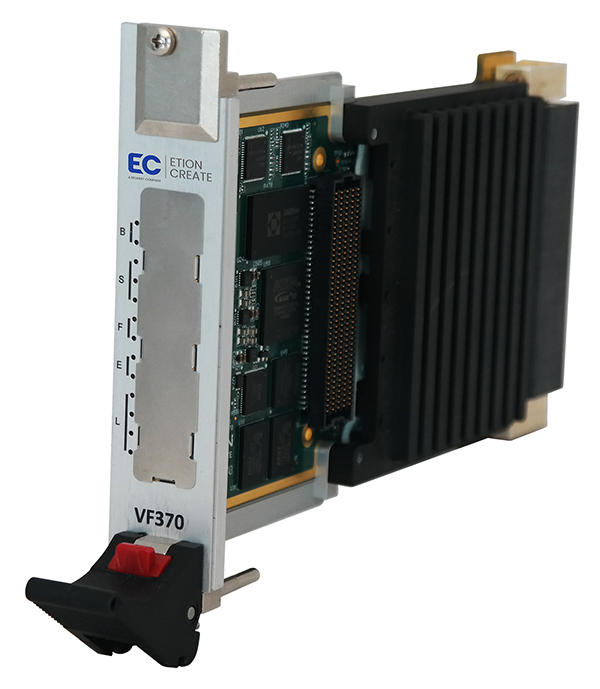
[Figure 3 ǀ The VF370 is a 3U OpenVPX module, fully designed, manufactured, and qualified to MIL-STD 810 G (CN1) and RTCA/DO160G certifications. Figure courtesy Etion Create.]
Open standards: the foundation
The rapidly evolving diversification of UAVs requires an equitably differentiated approach to their embedded architecture. While SWaP-C remains a central factor in UAV design, it’s the chosen system architecture that ultimately determines the degree to which an application is adaptable, maintainable and future-proof. Short innovation cycles in sensors, AI, and communications technologies can complicate the long service life of military systems, a tension that modularity and standardized interfaces can address.
Open standards such as OpenVPX and VNX+ provide a structured path to meet this challenge. They form the foundation for interoperable, multivendor solutions; reduce integration risks; and enable predictable technology refresh cycles. At the same time, they support different platform classes – from tactical, return-capable systems to strategic ISR and armed UAVs, with appropriate levels of performance density and ruggedness.
Flemming Christensen is founder and CEO of Sundance Multiprocessor Technology, an ISO9001-2015-certified company that delivers custom-designed embedded products for high-performance robotics, vision, motion, and sensor applications.
Sundance Multiprocessor Technology https://www.sundance.com/