Resilient tactical communications for air and missile defense in contested environments
StoryJune 16, 2026

Dan Moran
Cubic
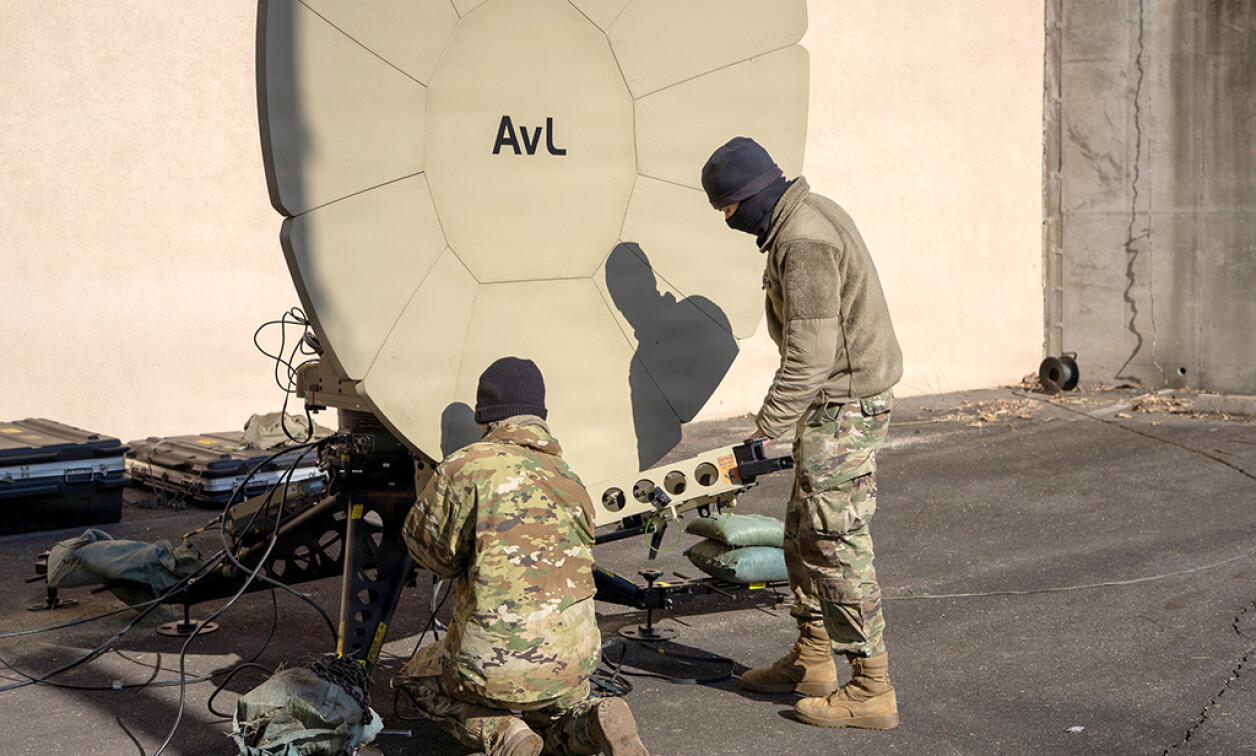
As the electromagnetic spectrum becomes increasingly contested, resilient communications are emerging as a foundational requirement for modern military operations. For forces operating in complex air and missile defense environments, maintaining reliable connectivity between sensors, platforms, and command nodes is essential for mission success. Modern tactical communications technologies enable resilient networks capable of operating despite jamming, interference and electronic attack. These secure communications solutions – protected satellite communications, tactical radio, emerging 5G/6G networks – help ensure that distributed forces can share data, coordinate operations, and maintain mission continuity in contested environments.
Military operations today increasingly face disruption in the electromagnetic spectrum. Adversaries target communications with electronic warfare (EW), aiming to degrade coordination and situational awareness. In air and missile defense, maintaining secure links among sensors, decision-makers and weapons systems is necessary for operational effectiveness.
This environment is redefining how forces communicate and operate. Maintaining reliable connectivity is no longer a supporting function; it is a requirement for executing missions under pressure and sustaining operational effectiveness in contested domains.
How adversaries target communications
Adversaries employ a range of EW techniques to disrupt communications and degrade operational effectiveness. They systematically target communications and positioning, navigation, and timing as a core operational vulnerability through jamming and spoofing in both real combat and large-scale exercises.
GPS and GNSS interference degrades navigation, artillery fire control, and network timing, while spoofing introduces false data that misleads platforms and ISR systems. Adversaries jam tactical voice and data networks to break command and control, often forcing units onto less secure alternatives while increasing exposure to detection. High-power mobile EW systems further expand contested environments, creating denied areas in the spectrum and increasing the risk of detection and targeting of emitting systems.
These tactics are now widely observed in active conflict, where large-scale EW is used to disrupt communications and GPS, degrading uncrewed aerial system (UAS) operations and affecting broader command and control systems.
Degraded communications quickly disrupt coordination and situational awareness across the force – units lose the ability to share a common operating picture, synchronize actions, and respond to threats in time. For air and missile-defense missions, even brief disruptions can undermine the effectiveness of the entire system.
Compressed decision timelines
Air and missile-defense operations are fundamentally a time-critical, networked problem. The kill chain (detect, track, identify, engage, assess) depends on continuous, low-latency data exchange between sensors, command nodes and interceptors.
Modern threats compress decision timelines to seconds. A cruise missile flying at low altitude may provide 60 to 90 seconds from detection to intercept, while a ballistic missile in terminal phase provides even less time. Within that window, sensor data must flow to a battle-management system for correlation and identification, a firing solution must be computed, and an intercept command must reach the appropriate launcher. Every one of these handoffs depends on communications, from data links and voice circuits to identification and network-relay systems.
Lessons from Patriot fratricide
Failures in communications and system integration have had real consequences. During Operation Iraqi Freedom in 2003, Patriot air defense systems were involved in mistaken-identity fratricide incidents that resulted in the loss of coalition aircraft and personnel.
Post-incident analysis by the Defense Science Board identified two primary factors: failures in combat identification and gaps in situational awareness, driven in part by limitations in communications and system integration. Combat-identification systems performed poorly, with identification reliability issues compounded by the density and complexity of the operational environment. At the same time, limited data exchange between Patriot batteries and other systems such as AWACS and Aegis left operators without a complete view of the airspace.
These limitations reduced access to a shared operational picture and contributed to the misidentification of friendly aircraft. The findings demonstrated how systems can operate in isolation when communications architectures are not fully integrated. (Figure 1.)
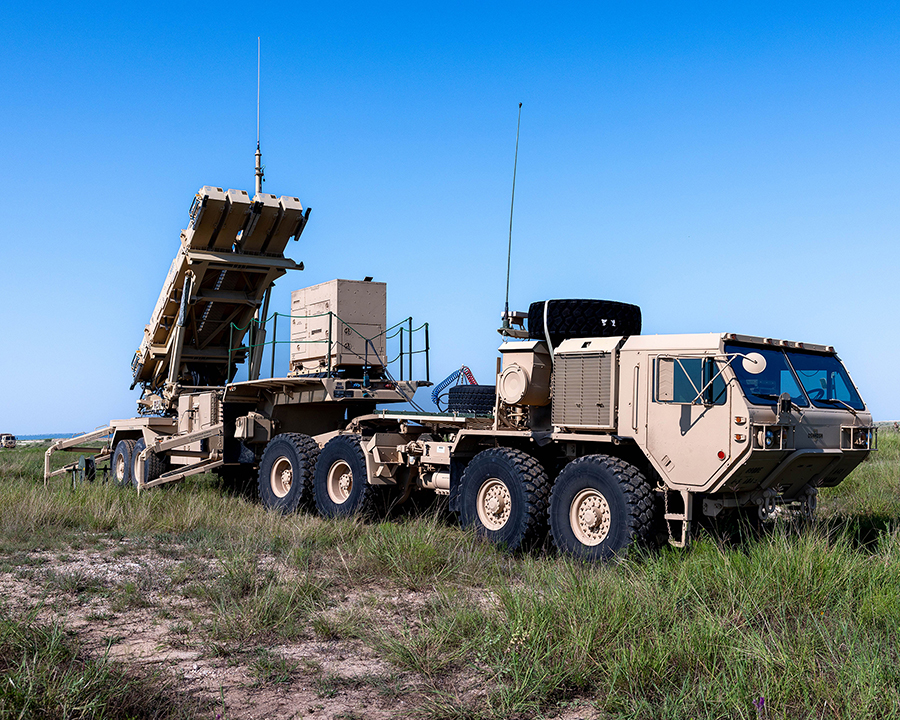
[Figure 1 ǀ Soldiers conduct a full Patriot missile system setup during field operations and training at Fort Cavazos, Texas. Photo: U.S. Army/Capt. Russell Shirley-Jones, 69th Air Defense Artillery Brigade.]
The lesson is clear: Even when sensors and interceptors perform as designed, the absence of resilient, integrated communications and data-sharing architectures degrades decision-making and increases the risk of mission failure.
CJADC2 and joint interoperability
The ability to operate across services and allied partners hinges on communications architectures that are both interoperable and survivable in contested, degraded and operationally limited environments. The U.S. Department of Defense (DoD) Combined Joint All-Domain Command and Control (CJADC2) framework treats resilient communications as foundational, with the strategy requiring command and control systems that remain effective in degraded and contested electromagnetic environments while enabling mission partner information-sharing at scale.
Across the services, this approach is driving a shift toward integrated, network-centric operations. Programs such as the Navy’s Project Overmatch, the Air Force’s Advanced Battle Management System, and the Army’s Integrated Battle Command System reflect a broader move toward architectures where sensors, decision-makers and effectors operate as part of a connected network rather than as standalone systems.
Key enabling technologies
This shift is supported by a range of enabling technologies shaping modern tactical networks:
- Protected tactical satellite communications can extend resilient communications beyond line-of-sight, helping maintain connectivity when terrestrial networks are disrupted.
- MIDS-JTRS [Multifunctional Information Distribution System – Joint Tactical Radio System] continues to provide Link 16 and multichannel data exchange across a wide range of platforms, supporting interoperability across joint and coalition forces.
- DARPA’s STITCHES [SOS Technology Integration Tool Chain For Heterogeneous Electronic Systems] framework enables data exchange between systems that were not originally designed to interoperate, supporting rapid integration across platforms with different data formats and architectures.
- Mesh networking technologies at the tactical edge create self-forming and self-healing networks that maintain connectivity even when nodes are degraded or lost. Edge-computing capabilities enable data processing closer to the point of action, reducing reliance on reach-back connectivity and supporting operations in denied environments.
- Emerging 5G/6G capabilities are also being evaluated as part of NATO and U.S. efforts to support high-bandwidth, low-latency communications integrated with existing military networks and standards.
Together, these technologies enable communications architectures that can integrate across systems while maintaining security and reliability, enabling forces to operate as a unified network rather than as isolated elements.
Resilient communications and mission continuity
As adversaries target networks with EW, the ability to sustain connectivity determines whether forces can coordinate and execute operations under pressure.
In air and missile defense, this requirement is especially acute. When communications degrade, the effects cascade across the kill chain, disrupting situational awareness and delaying response timelines. Resilient networks mitigate this risk by ensuring data continues to flow even when portions of the system are contested or degraded.
This requirement extends across multidomain operations. Forces rely on networks that can adapt in real time, reroute data, and maintain connectivity across multiple pathways, all of which enable operations to continue even when individual links are disrupted.
Real-world impact
Resilient communications technologies are supporting operations across a range of mission environments, from air and missile defense to distributed sensor networks.
In air and missile defense, networked architectures enable real-time data sharing between sensors and interceptors, supporting more flexible engagement decisions in time-compressed scenarios. Across broader operations, resilient communications allow forces to sustain coordination even when portions of the network are degraded, ensuring missions can continue under contested conditions.
In modern military operations, secure communications are essential for maintaining reliable connectivity during electronic attacks and degraded conditions. The ability to sustain secure and dependable communications will increasingly determine mission success.
Dan Moran, Ph.D., is Vice President and General Manager of Secure Communications at Cubic Defense, where he leads the development of advanced, mission-critical communications solutions. He brings more than 20 years of experience across the defense and technology sectors, with prior leadership roles at Collins Aerospace, Amazon, and Raytheon. Moran holds a Ph.D. in mechanical engineering from Texas Tech University.
Cubic Defense https://www.cubic.com/defense