Power, cooling challenges shape next wave of combat-vehicle electronics, Curtiss-Wright official says
NewsJune 24, 2026

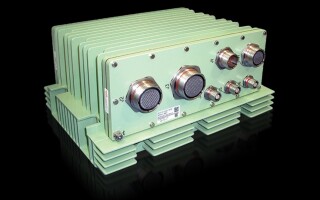
DAVIDSON, North Carolina. As military ground vehicles add more radios, sensors, electronic warfare systems, assured-positioning, navigation, and timing equipment, artificial intelligence compute, and autonomy functions, power delivery and thermal management are becoming central integration challenges for vetronics suppliers, a Curtiss-Wright official told Military Embedded Systems.
Compute hardware has expanded what combat vehicles can support, but military vehicles continue to operate in austere environments where power-dense electronics can be difficult to cool, said Jacob Sealander, chief architect of integrated solutions at Curtiss-Wright. As a result, the company works with customers to correlate power draw with resource usage so vehicle integrators can understand system requirements before adding new capabilities, he said.
Power delivery is also becoming more complex because modern systems draw more power than earlier vehicle electronics, Sealander said. Curtiss-Wright addresses the issue with approaches such as staggered boot functions, power control for individual resources, and inrush-current limiting to reduce platform power-delivery demands, he added.
The growing role of autonomy is adding security and encryption requirements to vetronics systems, Sealander continued. Multiple levels of security can create tradeoffs between desired capabilities, approved architectures, and startup times for systems that must establish trust on the platform, he said.
Open architectures are also changing how vehicle electronics are designed. Standards and frameworks such as CMOSS, VICTORY, OpenVPX, the Sensor Open Systems Architecture, or SOSA, Technical Standard, Modular Open RF Architecture (MORA), and NATO Generic Vehicle Architecture (NGVA) are helping shift the industry away from “one box per function” designs and toward software functions running across standardized networked processing environments, Sealander said.
Thermal management will help determine which next-generation capabilities can be fielded on combat vehicles, Sealander said. As compute and software technologies evolve, cooling approaches will need to evolve as well, including higher-performance thermal-management approaches for smaller form-factor cards such as 3U VPX, he added.