Multi-layer conflict avoidance for military and commercial drones in shared airspace
StoryNovember 05, 2025

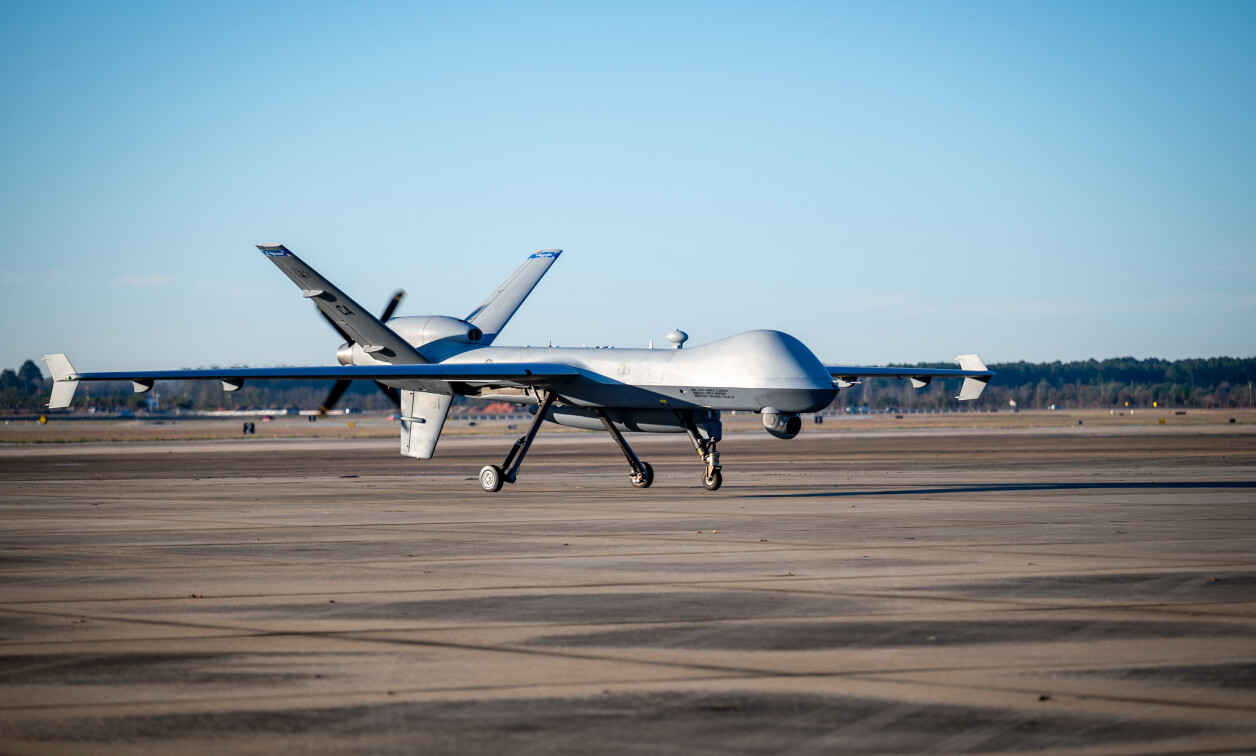
Military drones, much like their commercial counterparts, are on the verge of routinely traversing domestic airspace for logistics and other critical missions. Project ULTRA [UAS logistics, traffic, response, autonomy] – a public/private collaboration in North Dakota – stands as a testbed for this future, demonstrating the necessity for seamless National Airspace System (NAS) integration of both military and commercial uncrewed aircraft. However, current FAA [Federal Aviation Administration] proposals for Part 108 beyond visual line of sight (BVLOS) operations, which lean heavily on ADS-B [Automatic Dependent Surveillance–Broadcast] and GPS, are inadequate alone. Engineers and decision-makers must grapple with the operational and security vulnerabilities of relying on cooperative, GPS-based systems, especially as military organizations will increasingly leverage commercial off-the-shelf (COTS) drones. The solution may very well lie in integrating robust, independent surveillance with secure radar-based conflict detection.
North Dakota’s Project ULTRA [UAS logistics, traffic, response, autonomy] represents a major change in unmanned logistics: For the first time, military cargo drones will be routinely flown between major installations, such as Grand Forks Air Force Base and Cavalier Space Force Station, through active civilian airspace.
This multi-entity collaboration project, and ones like it which will surely follow, underscores both the appetite for, and the challenges of, routine military UAS beyond visual line of sight (BVLOS) operations in the National Airspace System (NAS). Even so, the airspace density there is nothing like what operations will encounter in major U.S. corridors, such as near Liberty International in Newark; what works in North Dakota may not work in New Jersey. Each concept of operations (CONOPS) must be carefully reviewed in terms of mission, location, aircraft, and related technologies.
FAA Part 108: Why ADS-B isn’t the silver bullet
The FAA’s [Federal Aviation Administration’s] draft Part 108 rule aims to unlock scalable BVLOS operations. The FAA placed ADS-B and other GPS-derived systems as a centerpiece requirement for drones to broadcast their positions. But ADS-B, at its core, is a cooperative surveillance technology, meaning that it works only if each aircraft voluntarily and accurately broadcasts its location. However, GPS, as such a method, remains susceptible to spoofing, jamming, and operational denial.
“In civilian operations, GPS and ADS-B are fragile. An enemy or even a clueless operator probably won’t broadcast anything at all,” explains Ray Adams, CEO of airspace integration company Trajectrix (Egg Harbor Township, New Jersey) and a 31-year -air traffic control (ATC) veteran. ADS-B’s dependence on GPS further amplifies the risk. GPS disruption, whether accidental or malicious, immediately degrades the integrity of separation and collision avoidance for all airspace users.
This situation is a nonstarter for defense applications, where mission assurance depends on resilient, layered navigation and surveillance architectures. The military, Adams notes, already assumes that adversaries will not cooperate, hence their robust investment in networked, secure radar.
Security, autonomy and the limits of embedded conflict avoidance
The debate intensifies when considering military aircraft, especially commercial off-the-shelf (COTS) drones reconfigured for defense logistics or intelligence missions. As in Project ULTRA, many military UAS operations may leverage commercially available platforms with the same vulnerabilities as commercial drones.
“GPS is good most of the time, but it’s also incredibly fragile. For the size and weight of logistics drones, you really need three things: INS [inertial navigation system] backup, optical correlation, and – critically – a ground-based mechanism for independently tracking the aircraft outside what it broadcasts,” Adams emphasizes.
Most military drones are designed for contested, GPS-denied environments and are equipped with multilayered navigation backups such as INS, optical terrain reference, and magnetic field mapping.
According to Adams, even standalone detect-and-avoid (DAA) solutions embedded in the aircraft are imperfect, especially in the area of detecting noncooperative threats like a lost pilot, a wayward general aviation plane or an aircraft with disabled transponders. “You can’t deconflict from things you can’t see, and you can’t see everything from a UAS, even with top-tier sensors,” Adams says.
Military UAS in the NAS: same vulnerabilities, same solutions
As military UASs transition to routine NAS operations for missions such as logistics, persistent surveillance, and supply delivery, many are being built as COTS drones or developed in partnership with industry. While U.S. Department of Defense (DoD) platforms may enjoy additional onboard security layers, their use in low-altitude, high-traffic airspace exposes the same collision and security risks as any large commercial drone.
“Any aircraft depending solely on GPS-based systems is risking both the mission and the safety of everyone in shared airspace,” Adams cautions. Mandating ADS-B or remote ID without backup independent surveillance is a “Swiss cheese” model where one failure mode can cascade into disaster, he said.
Military procedures historically favor redundancy and operational security. But in NAS airspace, especially above urban or infrastructure-rich corridors, the defense community needs integration protocols that mirror commercial best practices and address decentralized threat vectors. Neither embedded sensors nor broadcast-only mechanisms can ensure complete situational awareness.
The case for independent surveillance and secure radar integration
One path forward would be to integrate ground-based, radar-driven independent surveillance as a complementary layer to cooperative systems. This is the essence of what Trajectrix advocates with its patented and proprietary Secure Ground-Based Detection and Alert (S-GBDAA) system.
S-GBDAA leverages existing FAA and U.S. Department of Defense (DoD) radar infrastructure to securely process surveillance data within protected government enclaves. It does not transmit raw radar data, which would be a security risk, but instead generates precise, actionable alerts only for at-risk aircraft operators. This method ensures both operational effectiveness and cyber resilience. By extending the conflict detection range far beyond what airborne sensors can see, S-GBDAA “buys time,” Adams asserts, for both autonomous and piloted systems to deconflict safely.
“This architecture means military and commercial operators alike get the benefit of the nation’s surveillance network without risking classified movements or exposing sensitive patterns in the open,” Adams explains. The architecture is NIST- and CMMC 2.0-compliant, minimizing attack surfaces and aligning with both FAA and military data-protection standards.
Adopting secure, ground-based and federated DAA systems also fully aligns with the FAA’s own safety objectives and ICAO’s air-traffic management principles. To this end, Trajectrix is working cooperatively with both the FAA and the DoD on its S-GBDAA. The tool complements operator-based separation without shifting ATC responsibilities, while itsscalable, federated architecture enables expansion as NAS traffic density grows, thereby supporting both commercial innovation and the mission-assurance imperative of the DoD.
Engineering the future: From North Dakota to nationwide
As Project ULTRA in North Dakota sets the benchmark for integrated military drone logistics in the NAS, these demonstrations are only just the opening act. The long-term vision is a national airspace ecosystem in which both civilian and military drones can operate efficiently and safely beyond visual line of sight, in all types of airspace, at any scale.
For engineers, the task is to integrate multilayered surveillance: an ecosystem where every airspace user, regardless of origin, benefits from secure, independent, and resilient collision avoidance.
As the FAA finalizes Part 108 and the DoD continues to leverage COTS innovation in the NAS, embedded systems engineers must advocate for architectures that do not rely solely on GPS and ADS-B. The security of the nation’s airspace and the success of military autonomy will depend on it.
Dawn M.K. Zoldi (Colonel, United States Air Force, Retired) is a licensed attorney, an U.S. Air Force veteran, and the founder and chief executive officer of P3 Tech Consulting.
P3 Tech Consulting · https://www.p3techconsulting.com/