Checking in on the Mobile User Objective System (MUOS): Q&A with W5 Technologies' Jason Ferguson
StoryJune 15, 2026

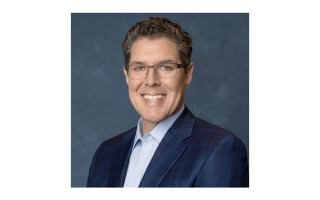
The Mobile User Objective System (MUOS) narrowband military satellite-communications system provides warfighters with secure, high-quality voice and data communications. Although it has been successfully deployed for decades, MUOS technology is still not pervasive. During a podcast with Jason Ferguson, president of W5 Technologies, we discussed the history of MUOS, how it fits into the defense industry today, and the efforts to sustain it. For the full interview and Ferguson’s in-depth knowledge of MUOS and W5’s MUOS solutions watch the whole episode here: https://tinyurl.com/5aurv7dn. Edited excerpts follow.
FERGUSON: Thanks for letting us talk about MUOS, which is definitely something we’re very passionate about here at W5. I am the president of W5. As we’re a small company, that means I wear multiple hats, so it can be everything from sales and business development and helping out on engineering challenges to changing the light bulbs in the office.
At W5 our core competency is cellular and modified cellular. Our main focus right now has been on MUOS technologies. We’re the only maker of a MUOS simulator for the satellite and the ground system. Beyond that, we just launched our MUOS gateway product and we’ve been attempting to deal with some of the coverage challenges that the systems have.
McHALE: Can you provide a brief history of MUOS, its place in the defense industry, and how it differs from other MIL SATCOM [military satellite-communications] systems?
FERGUSON: MUOS fills the narrowband SATCOM role within the U.S. Space Force’s arsenal of satellite-communications systems. The primary mission of MUOS is for the dismounted soldier.
[For background], we’ll go a little bit into the history of narrowband SATCOM, which has been around for decades. Going back to the 1960s or 1970s, we’ve had a capability for narrowband SATCOM capability. Basically if we had two people standing with walkie-talkies, the most we could see is 22 miles and then the curvature of the earth gets in the way. So, for our military, we need to talk beyond 22 miles. We need something or some way to get that RF [radio-frequency] wave to carry. We use satellites for that capability.
Specifically, MUOS uses geosynchronous satellites. The satellites are 22,000 miles away from the surface of the Earth. Traditionally, the previous versions of narrowband SATCOM went from where the satellite in the sky [acted] as a big repeater, so it listened on a frequency and chirped back. It then chirped back the response on another frequency, so everybody could hear what you were saying.
Then to add capacity, we went to a DEMA [double exponential moving average] system and that was like TDMA [time-division multiple access]. We were using time to share the frequency to give us more capacity.
Then MUOS shows up and just blows it out of the water, with 10 times more capacity than the previous system. But with 10 times capacity gain, there’s no free lunch in wireless comms, so we end up with additional complexity to get that extra capacity now on the previous-generation system.
[For example] For the dismounted soldier, he’s got a manpack-size radio with him and he has to stop, deploy a little dish, point it at the satellite, make his call, fold it back up, and then start moving again. So, one of the main requirements for MUOS was on-the-move capability. I want that SATCOM communication, but I want the soldier to be able to move while he’s talking.
A good example in a movie of the legacy way of doing this is the movie “Lone Survivor.” There’s a scene about three-quarters of the way through the movie: Our soldiers are being chased by the bad guys, and you see the soldiers have to stop, pull an antenna out of their backpack, open it up, and then point it. But they had to stop.
So, the first challenge was how do we get the terminal to actually move with the soldier, whether he’s on foot, in a vehicle, or on an aircraft. MUOS works in all of those scenarios now.
[Some thought] the M in MUOS stands for Marine User Objective System, because the Marines love this system – they’ve adopted it. But the M actually stands for mobile. The mobile user was the goal and it has to be small.
For the wideband systems that the Air Force uses, the system fits in a transit case or mounted to the back of a trailer. You need all this power; you need a generator or big battery bank [plus] time to set the dish up and get the link up. MUOS isn’t like that. It was an attempt to bring a cellphone-like experience to the dismounted soldier.
The other benefit of MUOS specifically for narrowband is the frequency range we use. We’re down between 280 and 380 megahertz. So the wave carries and penetrates more than commercial cellular systems, more than Starlink, more than anything.
McHALE: What about modernization of MUOS? Is there funding for it? How are we going to upgrade the systems?
FERGUSON: If we set out on day one to build [MUOS] in a sustainable way, it would have never been built. The upfront cost was so high that we had to take that risk, knowing that we would have to deal with the sustainability at a later date. Where we are now is dealing with that sustainability challenge.
Some of the boxes are very componentized, if you will, and I’m not talking like a specific board, but a box. We know what the box needs to do. So, they have cleaved off that and had gotten another company to come in and do a replacement.
But really that heartbeat of MUOS, that cellular network – the last effort I saw to reach out to industry for proposals on how to sustain that or modernize it was in 2022 and I don’t think the DoD [U.S. Department of Defense] saw what they were looking for. So those efforts didn’t continue. But as with anything, time’s not friendly to hardware. The hardware’s still getting older every day, and because of the complication, starting sooner than later is better because it gives us engineers more runway to solve the problems.
McHALE: When it comes to testing of equipment, I understand the government’s going to be shutting down some of their labs. Why are they doing that? And what options will users have for testing and troubleshooting most of the systems? Will you be one of the options?
FERGUSON: Yes. We provide the only option. How did we get into the spot in the first place? Once again, we have these large proprietary cellular systems of that era. And when I say of that era, what people need to understand is these are refrigerator-sized boxes. We didn’t even have multicore processors back then. So all of this magic is happening on single-core processors from the late 1990s, early 2000s era.
The challenge of a cellular provider is they needed to deal with all that sustainability, but they’re a moving target. Every 10 years they’re coming out with a new standard and the cellular providers have to work with their customers – the Verizons and Sprints – to kind of meet up. “Here’s hardware we need to pull, here’s hardware we need to add.”
With MUOS we bought a snapshot in time. We deployed the hardware, but kept one unit back, one ground system to test with, and that resides in the General Dynamics Scottsdale lab. And then there was another government lab that ties back to share that equipment. The original model was people building MUOS terminals would go to these labs, either the government certification lab or the General Dynamics lab, and they would do all their testing.
Well, if you’ve ever tried to develop something remotely, [it means] your engineering staff’s on the road actually developing a complicated piece of equipment. That’s hard. So what we did was we shrank the entire MUOS network and satellite into a portable transit case and we call that our Mighty Moose. A vast majority of integration is happening now on our portable ground station. How we got there is after we got done helping Lockheed and General Dynamics build the MUOS system, we rolled right into building the portable [solution]. We had the knowledge and capability at that time, so we rolled it forward and we started making smaller MUOS ground systems.
McHALE: So you got ahead of the requirements knowing they’re probably going that way.
FERGUSON: We had shopped it to the government to say, hey, we think the market’s going to need it, but there was no budget at that time to build it. So we started under the SBIR [Small Business Innovation Research] program.
To deal with specific problems, there’s not a one-size-fits-all base station or the box that sits below the antennas that we all see in our daily lives. Think of it this way: How do you do a tunnel? How do you provide cellular coverage into a tunnel? Well, your normal cell towers aren’t going to see inside. We just don’t have an RF wave that’s going to penetrate all that concrete. So, we make smaller cell sites and stick them up in tunnels or inside buildings or whatnot. So that’s the market that we tried to go after because new people were going to need a way to test it in their facility.
We also knew that there was going to be this large problem with sustainment of the system because it was on this proprietary hardware. And even when you look at that, moving that old software off that system onto a newer system may not really make sense because we’re so far off now.
We knew right away we needed to get on the sustainable hardware because even building a MUOS in a box, we know that the box needs to have a 20-year life cycle, minimum. Even though MUOS has been live for seven years, people are still buying the old SATCOM equipment. This path to upgrade to a new system was part of MUOS’s headache. It takes seven to 10 years to roll those terminals out.
MUOS is for the dismounted soldier, 100%. But to talk to that dismounted soldier, somebody else needs a MUOS terminal. So, we have to put the MUOS terminal in Humvees and MRAPs [mine-resistant ambush protected vehicles]. Every naval ship gets it. Subs get it. Every aircraft is getting it. So now theoretically, anywhere on the globe, any soldier could talk to another soldier [who’s] got a MUOS terminal.
So it speeds up the information-sharing chain, but it takes us time to push all that hardware out to everybody because it’s not like a ship [where] you can just show up on a dock and say, hey, here’s your new radio, go plug it in. They have to do a maintenance window.
McHALE: For the embedded components inside your systems, do you leverage commercial hardware and open standards? Do you develop stuff yourself or do you buy off the shelf?
FERGUSON: [Nearly] everything’s off the shelf. There are a few times [when] you’ll run into an engineering challenge and the quickest way to solve it is to just build it from scratch yourself. But because of the lead time, the amount of time that we need to keep this system running, and the systems that we build, we’ve had to rely on the commercial industry because if we said, hey, we need to build custom hardware before we can even start building our software, we would never achieve any of our goals. It’s too big, it’s too heavy a lift. But the amazing part is there’s software-defined radios and industry has really helped us actually exist.
We’re always looking to build in a sustainable way because we are on COTS [commercial off-the-shelf] and we do know that that’s going to shift [out] from under us constantly, sometimes predictably, sometime not predictably.
McHALE: Looking forward, what do you see as the game-changer for MUOS systems? Predict the future.
FERGUSON: The first game-changer is once the MUOS ground system is refreshed, we can add capability to those existing terminals and it will feel more performant. We basically need to fix the way data is handled in the network to make it feel more like a 4G or 5G system. Now the data rates aren’t ever going to ger monstrous fast, but for the individual user it would feel better.
On the handset side, there is some incredible stuff: For processing and wideband code division multiple access (WCDMA) signal, FPGA is king, but FPGAs need a lot of power to do its job. For us to shrink what we’ve done, we’ve actually gone back to a DSP. [The DSP] is really awesome from a power-constraint platform. Our MUOS ground system is more power-efficient [at] handling multiple MUOS terminals than a MUOS terminal. And it’s because of the processors that we chose to run inside that system.
It’s harder to program, but there are some benefits to DSPs because it’s bare metal. That means there’s no operating system; it’s your code executing on that processor directly. It’s harder to code, but we don’t have to deal with moving operating systems.
Some of the new DSPs that are going to hit the market [are] going to be incredible. I think it’s going to change handsets for the dismounted soldier just because right now the guys are carrying around three batteries. I think there [will] be ways to work with these new chips that are coming out down the pipeline, these really specialized DSPs; I think they’re going to make things way more power-efficient.