GUEST BLOG: MOSA is the conduit for commercial insertion … but there is a floor to commoditization
BlogDecember 12, 2025

Jonathan Cain
SOSA Consortium

The insertion of commercial products into military acquisitions is critical for the future strategic advantage of the U.S. and allied nations; the recent acquisition reforms put forward by the U.S. Department of Defense (DoD) and Secretary Hegseth put this certainty front and center. The reasons are obvious: The continued conflict in Ukraine, the rapid increase in Chinese production capability, and technological advancement in artificial intelligence (AI).
But when we talk about commercial products, there is an implied value proposition that tips toward large-volume, horizontal markets, where commoditization drives down cost per unit. Quality is often not sacrificed, but rather refined: While commercial customer requirements change with the increasing standards of living, technological design tends toward pursuing efficiencies in production capability, rather than more performance.
I live in Tucson, Arizona, an arid desert with summer highs topping 100 °F. It’s only a minor inconvenience when my iPhone won’t turn on because I accidentally leave it outside too long. Even as the phone protects itself from overheating, it still gives the option to make emergency phone calls. There are also times when it crashes, but again, that’s just an inconvenience. But what happens when military equipment fails or decides to not turn on when service members need it most?
Absolute reliability and peak performance have been the largest driving forces behind the defense industry over the last 80 years. We have created a system that is completely risk-averse. The size and scope of the industry that delivers these reliable, well-performing products has swelled to ensure that every unknown unknown is understood prior to fielding.
Systems engineering focuses on quality attributes – the “-ilities” like reliability, availability, or securability. Getting each of these into a new system causes a significant increase in cost and schedule, but they also ensure that reliable system performance is met wherever it’s needed, no matter what.
Secretary Hegseth’s “Acquisition Transformation Strategy” emphasizes speed for system deployment and fielding even an 80% solution with an expectation of upgrading as soon as practical. This is where MOSA [modular open systems approach] comes in: Within this context, MOSA is an approach to finding the right areas at which pre-existing performance surplus of components does not drive down overall system quality. MOSA uses open systems architectures or government reference architectures to rigorously define open interfaces and the component functionality in between them. This architectural decomposition facilitates the understanding of a component’s risk relative to the overall system, especially with respect to quality, and provides a low-cost, rapid path to upgradability. In this way, we see that MOSA is the conduit for commercial insertion: A system that performs with defense-grade quality that realizes the cost and production-readiness benefits of commercial products.
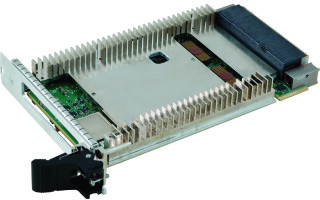
However, even within the components, there is still likely a floor to commoditization. Consider, for example, a plug-in card (PIC) that is aligned with the Sensor Open Systems Architecture, or SOSA, Technical Standard. The PIC could include a state-of-the-art, embedded GPU enabling AI at the edge. However, a commercially available GPU chip that was designed for use in pristine air-conditioned data centers must be “hardened” to reliably perform in a desert summer even after operating for seven hours. This is a realistic example of the floor to the cost benefit of commercial insertion.
As the DoD continues to disrupt old acquisition strategies, MOSA will continue to be pivotal for understanding and mitigating risks to quality due to commercial insertion. The MOSA acquisition strategy creates new and strengthens existing horizontal markets that economically find the right level of commoditization for military equipment. So, as industry drives towards commercial insertion, MOSA is the conduit to maintain focus on protecting service members everywhere, every time, while also driving down cost and increasing production readiness.
SOSA Consortium · https://www.opengroup.org/sosa