“More-electric” aircraft and efficient power management
StoryDecember 05, 2025

Sanjeev Sachan
TT Electronics PLC
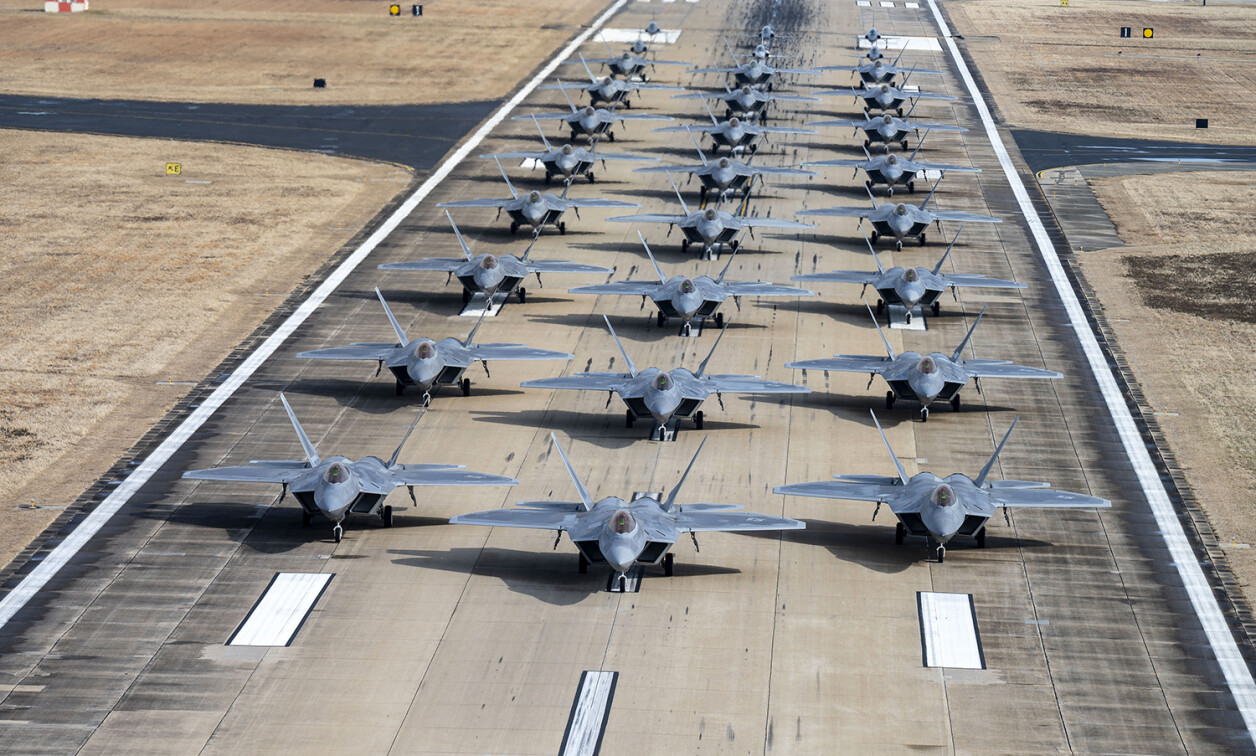
The U.S. military is at the forefront of research into more-electric aircraft, which could lead to the development of lighter platforms that have more efficient power management and improved mission performance.
The U.S. military is investing in several innovative “more-electric” aircraft concepts as a means of delivering platforms with enhanced efficiency, reduced weight, and lower operating costs. The more-electric concept refers to the use of electric power for an aircraft’s non-propulsive systems, with attendant increases in the power-generation, power electronics, fault-tolerant architecture, flight-control, and conversion systems.
In early 2025, the U.S. Air Force awarded a grant to ZeroAvia to conduct a feasibility study focused on a hydrogen-electric aircraft alongside advanced autonomous technology. ZeroAvia was tasked with analyzing the potential for developing and delivering an 8,000-pound autonomous aircraft with hydrogen-electric propulsion for reduced engine noise and low thermal signature, both of which would considerably reduce the aircraft’s detectability.
This investment was quickly followed by a U.S. Army Small Business Innovation Research (SBIR) contract awarded to aerospace supplier Electra to advance the research and development of hybrid-electric power train, power, and propulsion systems. Under this contract, Electra will conduct a comprehensive series of technology-maturation and risk-reduction activities for hybrid-electric propulsion related to its EL9, a nine-passenger ultra-short takeoff and landing aircraft currently in development. The work is aimed at delivering valuable insights and test data to help the Army understand the benefits, tradeoffs, and operational procedures associated with operating hybrid-electric propulsion systems.
The two projects are illustrative of broader interest in the concept of the more electric aircraft (MEA), both in the U.S. and further afield. Much research and development effort is being spent looking at how traditional hydraulic and pneumatic systems can be replaced with electric alternatives, resulting in enhanced efficiency, reduced weight, improved stealthiness, and lower operating costs. The all-electric aircraft (AEA) for military service might be some way off, but significant progress is being made in developing hybrid-electric and fully electric options, representing an exciting period of opportunity and change.
Explaining the need for more-electric aircraft
As the efficiency and safety of modern aviation systems rely increasingly on electronic systems, the opportunities – and responsibilities – for design engineers are expanding rapidly. The drive for efficiency and weight savings demands a bold approach to avionics, requiring systems architects to make crucial platform-level decisions. Is it feasible to eliminate hydraulics and pneumatics from the aircraft? What about the power distribution strategy – is the supply chain mature enough to support a wholesale migration to higher voltages?
Aviation system designers must continually focus on efficiency optimization and maximizing power usage. Energy management is critical, demanding a total life cycle approach when developing intelligent power systems. Additionally, with safety paramount in aviation, designers must be reliability champions, insisting on step-change improvements in an electrical system’s performance over current capabilities. Perhaps most importantly, the role of the integration specialist is essential to the seamless operation of multiple complex aircraft systems.
Design principles and strategies for sustainability
Within this challenging context, aviation designers in military environments must balance visionary ambition with proven engineering design principles and methodologies, with size, weight, power, and cost (SWaP-C) minimization criteria at the core. Modular architectures enable technology to be reused and scaled efficiently across different platforms, which reduces both cost and development time. Advanced intelligent energy-management systems are key enablers of efficiency, ensuring the effective harvesting and redistribution of power.
Rigorous systems-integration methodologies combine various subsystems into a cohesive whole, improving interoperability while enhancing performance, reducing costs, and improving overall functionality and safety. Future-proofing designs ensures that platforms retain flexibility as regulations and technologies evolve, while whole-life cycle thinking considers the impact of design decisions on manufacturing and operation through to end-of-life management.
The growing investment in hybrid-electric propulsion vividly illustrates many of these principles. Modular architectures, for example, enable engineers to trial hybrid powertrains on smaller aircraft before scaling up to larger platforms. These hybrid systems offer an immediate opportunity to demonstrate how scalability and practicality can coexist in real-world military applications.
Components and enablers of MEA design
Fundamentally, aviation systems rely on a core set of electrical technologies for power generation, distribution, and management, as well as for powering avionics and other critical systems.
Electrical power-conversion systems are widely recognized as a cornerstone of a more electric future. These systems – as fundamental enablers of the MEA concept – efficiently distribute and manage electrical power, converting between different forms (AC and DC) and voltage levels to meet the diverse needs of the various onboard systems. High-efficiency converters using silicon carbide (SiC), and gallium nitride (GaN) are enabling smaller, lighter, and more efficient systems that drastically reduce power losses.
Bidirectional power systems in modern aircraft unlock new approaches to energy recovery. Unlike traditional unidirectional power supplies, which only deliver power, these systems can both supply power to a load and absorb power from it, enabling the transfer of electrical energy in both directions. Bidirectional power systems are crucial for various applications, including energy storage. Excess power from motors or sub-systems during low-demand phases
can be fed back into batteries or other loads, for example, improving operational efficiency and directly supporting the wider trend towards electrified propulsion.
Smart sensing networks monitor various operational aspects of an aircraft in real time, enabling systems to be dynamically optimized, improving efficiency, extending component life, and reducing unplanned downtime. Smart sensors are typically used for structural health monitoring (SHM), environmental monitoring, and engine health monitoring. Sensor technologies are emerging that monitor pilot alertness to boost safety and mission performance. Sensor types include fiber optic, piezoelectric, guided wave, and current sensors, with micro-electromechanical systems (MEMS) sensors increasingly used due to their miniaturization levels, reduced cost, and enhanced performance. Both wireless and wired sensor networks are deployed, depending on the specific application and location within the aircraft.
Battery integration plays a crucial role in MEA
Battery integration is key to more efficient aviation performance. Batteries play a crucial role in the MEA, beyond just engine starting and backup. At the heart of an integrated energy-management system, they provide power for various systems and are central to peak load balancing and energy recovery; they also support propulsion in hybrid or fully electric designs. Lithium-ion batteries currently dominate due to their relatively high energy density and established manufacturing infrastructure, but solid-state batteries are seen as a promising next-generation technology, with the potential of even higher energy density and enhanced safety.
High-voltage (HV) distribution is critical, too. As the trend towards MEA drives an increase in the number of electrical components and systems, the need for interconnectivity grows. With electrical wiring harnesses currently representing anything between 1% to 3% of the aircraft’s empty weight, manufacturers are considering replacing or complementing traditional AC systems with HV DC systems. Higher voltage levels require less current for the same power transmission, leading to smaller and lighter wiring harnesses, and hence significant weight savings for next-generation military aircraft. Today’s platforms typically use 270 volts or 540 volts, but higher voltages such as 800 volts or even 1200 volts are being explored. Ultimately, distribution levels of several kilovolts will be required to support the power requirements of future platforms such as electric propulsion.
Blue skies ahead
In conclusion, the U.S. military continues to fund innovative research and development projects that are pushing forward the boundaries of knowledge on more electric aircraft. The trend towards MEA is seeing an increasing electrification of key aviation systems, enabled by advances in power conversion, power distribution, battery management, and sensing technologies. The all-electric aircraft for both military and civil environments may be some years away, but the roadmap towards it is based on modularity and scalability. Market success will be based on the ability to successfully test, prove, and scale architectures through successively larger aircraft structures.
Sanjeev Sachan is director of engineering at TT Electronics, where he leads the power supply and magnetics engineering division across North America. With over 27 years of experience in developing complex products for aerospace and defense applications, Sanjeev brings deep expertise in power management, magnetics, distribution, control, and system integration. His team specializes in designing and manufacturing high-performance power supplies for environments ranging from ground-combat vehicles to space systems and taking on such challenges as constrained footprints, thermal management, vibration, EMI, and lightning protection.
TT Electronics https://www.ttelectronics.com/