Beyond the horizon: How naval radar is evolving to meet tomorrow’s threats
StorySeptember 03, 2025

Naval radar operators peer at screens filled with hundreds of contacts that could be anything from harmless seabirds to coordinated drone attacks. Artificial intelligence (AI) algorithms sort through ocean clutter in real time, distinguishing genuine threats from false alarms in seconds rather than minutes. Software updates push new threat recognition capabilities to radar systems overnight. These systems are the new reality of modern naval radar technology: mechanisms that must evolve continuously to counter threats that are smaller, cheaper, and more numerous.
Recent conflicts have demonstrated how small, inexpensive drones and other low-signature threats are changing naval warfare fundamentals. Where naval forces once prepared for high-value targets like fighter jets and cruise missiles, they now face swarms of expendable platforms that can overwhelm traditional defense systems through sheer numbers and unpredictable behavior.
From improved detection algorithms to entirely new testing methodologies, the naval radar industry is rebuilding itself around the reality that tomorrow’s threats will be smaller, smarter, and more numerous than anything previous generations of military personnel have faced. The solutions emerging from defense contractors reveal how quickly naval forces must adapt to maintain their edge in an increasingly contested maritime environment.
Searching through the swarms
Naval radar operators face a problem that would have seemed impossible just a decade ago: too many targets to track. Small swarms of uncrewed aerial systems (UASs) can deploy dozens or hundreds of platforms simultaneously. This new situation creates “a high-density tracking environment that stresses radar beam management and processing resources,” says Miki Daniel Nielsen, manager of naval sales at Terma (Arlington, Virginia) Nielsen. “Small drone swarms represent a fundamentally different challenge to naval radar systems compared to traditional threats such as aircraft or surface vessels,” Nielsen says. “While conventional threats are few and high-value, swarms may involve dozens or even hundreds of low-RCS [radar cross-section] drones moving unpredictably and often at low altitudes.”
The challenge goes beyond sheer numbers. Small UASs naturally mimic harmless objects that naval radar systems encounter daily.
“Their signatures may resemble those of birds or wave tops, increasing the risk of missed detections if the radar is not optimized for high-resolution discrimination in such environments,” Nielsen notes.
Perhaps most troubling for operators is what Nielsen describes as “the question of intent.” A drone swarm might include platforms that look identical on radar but serve completely different purposes – some gathering intelligence, others jamming communications, and still others carrying weapons. This ambiguity forces split-second decisions about which contacts pose the greatest threat.
Terma’s response centers on artificial intelligence (AI) that can learn to distinguish patterns in real time. Traditional radar processing relies on fixed rules to filter out false returns from waves and weather, but these methods struggle with low-signature threats like drones. (Figure 1.)
“AI changes the game by enabling pattern recognition that adapts in real time,” Nielsen says. “Machine learning models can be trained on radar return profiles, EO/IR [electro-optical/infrared] signatures, and behavioral patterns to identify and classify targets with a higher degree of confidence – even when signal-to-noise ratios are low.”
.jpg)
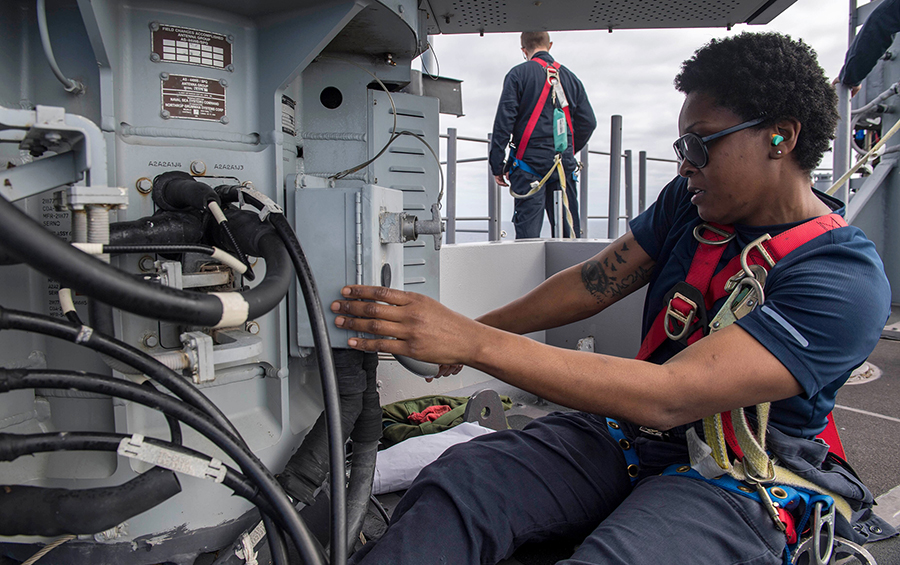
[Figure 1 | A IFF/HG antenna for Terma's SCANTER 6002 system on a Royal Danish Navy Absalon-class frigate.]
The company’s AI-based classifier can recognize and categorize small drones at significant distances, helping operators focus on genuine threats while filtering out harmless contacts. The system also combines inputs from multiple sensors – radar, EO/IR, electronic support measures, and automatic identification systems – to create what Nielsen calls “a unified target picture that’s far more accurate than any single-sensor feed.”
Looking ahead, Nielsen says his company sees radar systems evolving from simple detection tools into decision-support systems that help smaller crews manage increasingly complex threats.
“Radars must evolve from pure sensors into decision-support systems, offering clarity in complexity,” Nielsenhe asserts, pointing to the trend toward leaner crew structures across naval forces.
Handling sea-skimming threats
Recent conflicts have made one factor particularly urgent: detecting threats that fly just above the ocean surface where traditional radar systems struggle to see them.
Northrop Grumman designed the AN/SPQ-9B radar, which uses X-band technology to counter sea-skimming antiship missiles that other radar frequencies might miss entirely.
“X-band radars excel at detecting sea-skimming missiles, as they offer higher resolution for distinguishing small targets and increased accuracy tracking fast-moving targets compared to other radars,” says Greg Teitelbaum, vice president of maritime/land systems and sensors at Northrop Grumman (Falls Church, Virginia).
The challenge of detecting low-flying threats becomes exponentially more difficult when waves, weather, and electronic interference create what radar operators call “clutter” – false returns that can mask genuine threats. Northrop Grumman has developed enhanced signal processing techniques that they say help X-band radars cut through this interference more effectively than other systems. (Figure 2.)
Teitelbaum points to operations in the Red Sea as an example of how “increasingly sophisticated threats necessitate faster decision-making, which requires software-defined systems that allow for the rapid introduction of advanced capabilities.”
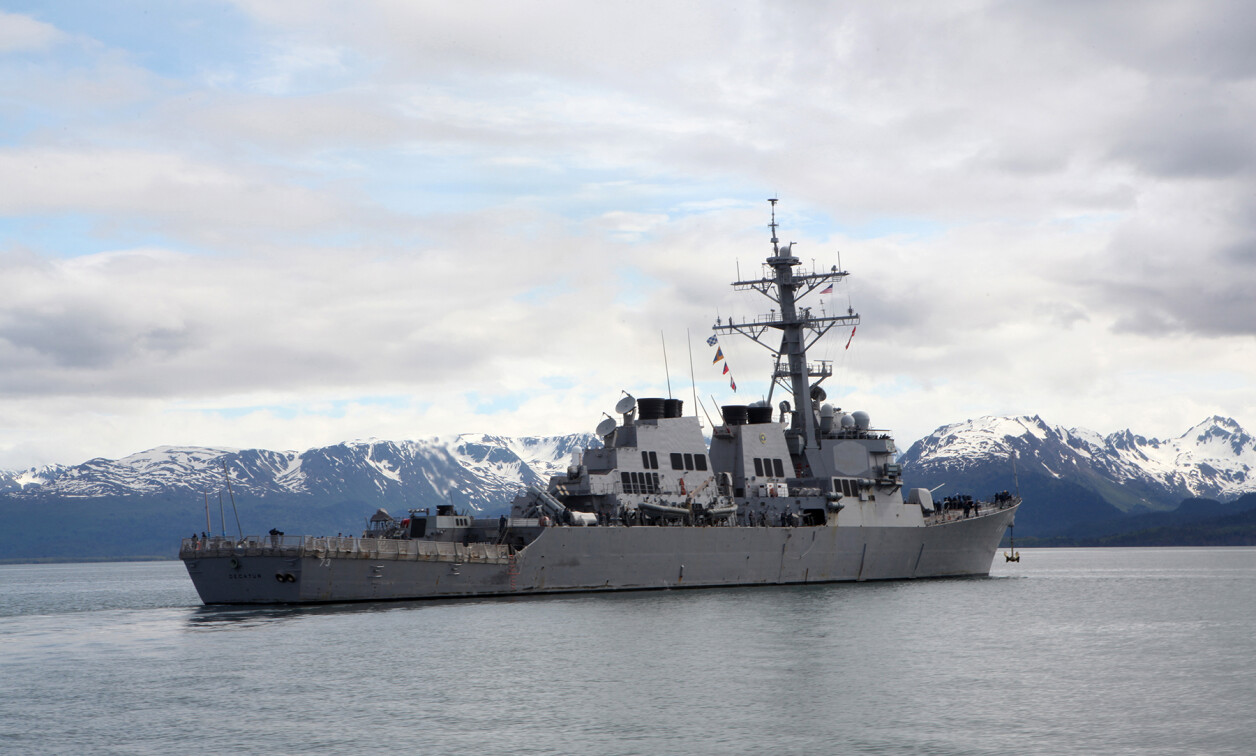
[Figure 2 | Northrop Grumman’s AN/SPQ-9B X-band radar is designed for littoral environments with high clutter improvement factor for detecting low-flying anti-ship cruise missiles and surface threats. U.S. Navy photo by MC3 Michael H. Lehman.]
This lesson has shaped Northrop Grumman’s approach to developing next-generation maritime radars, Teitelbaum notes. The executive says that the company is moving toward digital software-defined architectures that can be updated rapidly as new threats emerge, rather than requiring lengthy hardware modifications.
“Our digital software-defined radars [enable] more precise detection measurements of range and velocity,” he explains, adding that the modular design also means these systems can be installed quickly across different types of ships without extensive modifications to existing platforms.
Northrop Grumman is developing technologies aimed at countering hypersonic and other advanced antiship weapons using a new maritime X-band radar. This system will use distributed filtering and advanced beamforming techniques designed to perform in what Teitelbaum calls “today’s most challenging electromagnetic environments.”
With this technology, ships can “see through noise and operate effectively in increasingly complex electromagnetic environments,” he adds.
Radar systems as building blocks
Raytheon (Arlington, Virginia) is taking a different approach with its SPY-6 radar family by building systems that the company claims can handle multiple missions simultaneously while adapting quickly to new threats through software updates.
Older systems like the SPY-1 were built as single, large units, but SPY-6 uses modular building blocks that can be scaled to fit different ships and mission requirements.
“SPY-6 is the Navy’s first truly scalable radar,” says a Raytheon SPY-6 spokesperson. “Each radar is built with individual ‘building blocks’ called radar modular assemblies (RMAs). Each RMA is a self-contained radar antenna in a 2-foot-by-2-foot-by-2-foot box. The RMAs stack together to fit the mission requirements of any ship.” (Figure 3.)
This modular approach enables what Raytheon calls Distributed Maritime Operations, in which sensors across different platforms can work together to create a comprehensive picture of the battlespace.
“Distributed sensors across land, sea, and air domains can be connected to provide a detailed picture across a large area, allowing for improved tracking of ballistic missile targets,” the spokesperson explains.
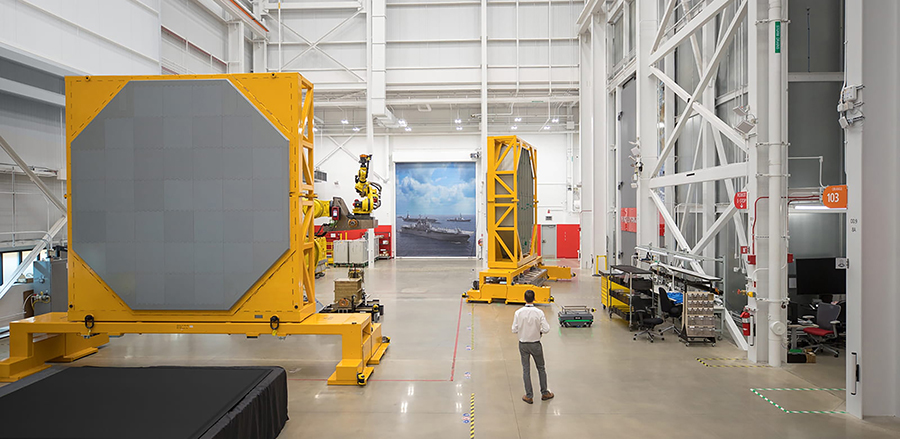
[Figure 3 | Raytheon’s SPY-6(V)1 radar uses modular building blocks called radar modular assemblies (RMAs) that stack together. Image courtesy of Raytheon.]
Recent naval operations have highlighted another key advantage of the SPY-6 design: ammunition conservation. In environments like the Red Sea during the past several years, where ships face sustained threats over extended periods, the ability to engage targets more efficiently becomes critical.
“SPY-6 provides better detection and tracking capabilities, not only allowing sailors to identify threats earlier, but they also reduce the number of missiles needed to be deployed per threat, which allows for more Vertical Launch System (VLS) cell offensive opportunities,” according to the Raytheon spokesperson. “This is critical as conserving munitions is a big factor in the Red Sea conflict.”
Raytheon has designed SPY-6 around software-defined capabilities that can be updated rapidly as new challenges emerge. The company uses what the spokesperson describes as “a baseline of software code that’s continually upgraded, shared, and re-used across multiple radar programs – similar to the apps you use on your smartphone.”
This approach enables Raytheon to gather data from military exercises and conflicts to enhance radar performance across its entire product line, then push those improvements to deployed systems through software updates rather than hardware modifications, the spokesperson notes.
Raytheon’s Andover, Massachusetts facility houses both radar development and a military-grade gallium nitride (GaN) foundry, enabling the company to control the entire development process from advanced materials research to final system integration.
“As technology needs advance and change, the foundry evolves to create trusted differentiating capability,” says the Raytheon spokesperson.