Making the case for MOSA
BlogNovember 20, 2025


Six years have passed since the tri-service memo was issued by the Air Force, Army, and Navy leadership mandating the use of a modular open systems approach (MOSA) in all new programs and technology refreshes. Many in the defense community were already embracing MOSA strategies and leveraging open standards, but having the three services mandate it promised faster adoption. Update: It’s happening. MOSA is already the law and now defense secretary Pete Hegseth is dictating a MOSA approach as part of his efforts to reform and speed up the defense acquisition process.
No one would argue that the defense acquisition process is anything faster than glacial, so the reforms promised by Hegseth and his team are welcome; it’s true, however, that attempts to change the mammoth bureaucracy slowing things down have been proposed before, with little change.
Many in the industry saw the roadblocks in the current infrastructure as too daunting, so new processes to test, develop, and procure technology were created outside of the bureaucracy. Rapid-acquisition offices were set up, Other Transactional Authorities (OTAs) got dusted off, the Defense Innovation Unit (DIU) and Space Development Agency (SDA) were created to leverage commercial innovation to deploy it to the field as fast as possible. Alternative processes also provide a gateway for nontraditional or smaller defense suppliers to gain entry into the defense market, as do MOSA initiatives like the Future Airborne Capability Environment, or FACE, and the Sensor Open Systems Architecture, or SOSA, Consortia.
With a memo dated November 7, 2025, Secretary Hegseth is basically saying that previous efforts have not been enough to accelerate acquisition, stating that the U.S. military acquisition process needs to assume a wartime footing and “dramatically accelerate the fielding of new technology.” Along those lines, he renamed the Defense Acquisition System (DAS) to the Warfighting Acquisition System.
Calling the current acquisition system “unacceptably slow,” Hegseth said to speed it up the Department will need to overcome three systemic challenges:
“(1) fragmented accountability where no single leader has the necessary authorities to lead our programs and urgently deliver results; (2) broken incentives that reward completely satisfying every requirement and specification at significant cost to ontime delivery; and (3) government procurement behaviors that disincentivize industry investment, efficient production, and growth, leading to constrained industrial capacity that cannot surge or adapt quickly.”
The memo, titled “Transforming the Defense Acquisition System into the Warfighting Acquisition System to Accelerate Fielding of Urgently Needed Capabilities to Our Warriors,” goes on to establish that Portfolio Acquisition Authorities (PAEs) will be set up to reorganize “existing Program Executive Offices” to prioritize speed.
PAEs will be tasked with maximizing “use of Modular Open System Architectures (MOSA) for development programs moving forward by obtaining delivery of critical system interfaces with government purpose rights enable modular competition and supply chain resiliency.”
The change promised by the MOSA mandate and Hegseth’s reforms remind me of the atmosphere around the so-called COTS Memo more than 30 years ago, when then-defense secretary William Perry issued a memo mandating the use of commercial off-the-shelf (COTS) components and equipment wherever and whenever possible. He was battling the bad press of $400 hammers but also looking for a way to get commercial tech more quickly to warfighters like today’s leaders. COTS caused lots of consternation decades ago, but it’s now a common form of procurement within the defense department and will enable MOSA and acquisition reforms called for by Hegseth.
We’ve compiled a MOSA e-book to track how fast MOSA is progressing and how the military leadership is fueling its momentum, featuring articles from our team of journalists and contributions from industry leaders. Read it here.
We kick it off with my interview with Jason Thomas, Systems Engineering Lead for the Department of the Navy in the Office of the Assistant Secretary of the Navy for Research, Development, Test and Engineering. We spoke during the MOSA Industry & Government Summit (held in late August 2025), where he talked about MOSA from a systems-engineering perspective and detailed the Navy’s MOSA Guidebook, which has a new edition coming out in 2026.
The speakers at the MOSA event also gave a preview of what we are seeing today regarding how the department is embracing MOSA and acquisition reform, thanks to reporting from our own Dan Taylor.
Brig. Gen. Jason Voorheis, program executive officer for the Air Force’s fighters and advanced aircraft, told conference attendees to think of MOSA “as the single most consequential lever we can pull to ensure our future warfighters have the capabilities they need to win,” Taylor reported here.
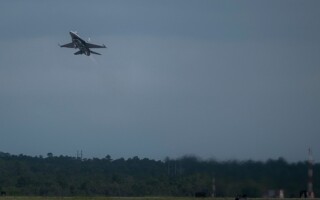
He added that the Air Force is building MOSA into new programs such as the Next Generation Air Dominance fighter and the Collaborative Combat Aircraft (CCA) [see image above], according to Taylor. Voorheis then noted that the CCA already produced a prototype flight in less than 18 months from award of the contract, something he said would have been unthinkable under older acquisition models.
In a separate speech, Christopher Garrett, technical advisor for systems engineering at the Air Force Life Cycle Management Center, acknowledged that while true reform may take decades, he “will preach MOSA until I die, because you have to have open architectures to be agile. There’s no doubt,” Taylor reported here.
This administration and this defense department have shown they will move quickly whether programs are popular or not, so I expect changes to happen pretty fast. But the question remains: Will this mean a larger defense budget or a smaller one as they focus on procuring more commercial technology rather than developing tech from the ground up, a method that’s been traditionally more expensive.
The editorial board of the Wall Street Journal asked the same thing yesterday (November 17, 2025) in their editorial titled “Trump and a New ‘Arsenal of Freedom’.” They write that the proposed defense budget doesn’t show “investors the Pentagon is serious.
“The Pentagon also needs money to buy redundancy so it isn’t stuck with only one vendor who can produce a given weapon,” they write. “More sources reduce prices over time.”
More sources and more commonality is the point of MOSA, which will save money over time – think lower life cycle costs as upgrades will be easier with open architectures and downtime less.
You might call that the business case for MOSA. Members of the FACE and SOSA Consortia dedicate many hours of their time to making that case. I recently moderated two webinars on this topic – one from each consortium. Check them out:
Making the Business Case for the SOSA Approach
The FACE Approach: Cost Reduction through Portability and Interoperability
Also be sure to engage with the annual Special Editions we produce for the FACE and SOSA consortia. For all our MOSA coverage, please visit www.militaryembedded.com/MOSA.