As the global military threat landscape evolves, the missile threats to the U.S. have shifted as well: Hypersonic glide vehicles maneuver unpredictably at extreme speeds, cruise missiles fly below radar horizons, and adversaries bombard air and missile defense networks. These opponent systems compress warning timelines and seek to exploit legacy defense architectures.

Military Embedded Systems
Op-Eds
Radar/EW

Radar/EW

Open architectures embraced in European defense circles - Blog
June 17, 2026While there is not a huge program of record or one nation’s war department mandating adoption of a modular open systems approach (MOSA) in Europe, systems integrators are building with modularity in mind and acquiring technology based on open standards like the Sensor Open Systems Architecture, or SOSA, Technical Standard. I discussed this trend with MOSA proponents during Eurosatory in Paris, France, this week.
Unmanned
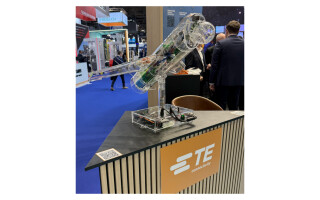
Transparent UAS model displays connector placement - Blog
June 16, 2026EUROSATORY: Paris, France. When you’ve been to hundreds of trade shows booth displays can often look the same after a while; the folks at TE Connectivity this week got creative with how they show where their different products would be found in an uncrewed aerial system (UAS).
From The Editor

GIVING BACK: Better Back Nine Foundation - Blog
June 15, 2026Each issue, the editorial staff of Military Embedded Systems will highlight a different organization that benefits the military, veterans, and their families. We are honored to cover the technology that protects those who protect us every day.
Comms

GUEST BLOG: Enabling agile warfighter communications – CMOSS Mounted Form Factor (CMFF) Mounted Common Infrastructure (MCI) supports Ivy Mass - Blog
June 03, 2026Modern military operations demand adaptable, interoperable, and resilient communications systems that keep pace with evolving mission requirements and technological advancements.
Unmanned
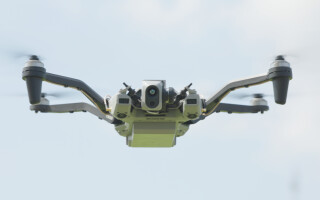
Special Operations and drone tech - Blog
May 19, 2026The fastest growing part of the SOF Week exhibits floor over the last few years has been companies focused on autonomous systems – air, ground, and sea – many carrying artificial intelligence (AI) solutions. The 2026 event, for which we are again the Official Show Daily and Show Guide producer and where this issue is distributed, promises even more growth in these areas.
From The Editor

GIVING BACK: Word of Honor Fund - Blog
May 06, 2026Each issue, the editorial staff of Military Embedded Systems will highlight a different organization that benefits the military, veterans, and their families. We are honored to cover the technology that protects those who protect us every day.
Comms

GUEST BLOG: Space resilience is critical. So why are satellites still so exposed? - Blog
April 28, 2026Only recently, Iran jammed satellite internet signals to restrict access inside its own borders, while Russia has constantly interfered with satellite broadcasts that support Ukraine – these are just some of the more visible demonstrations of the fact that space systems can be disrupted and that they are considered targets in modern conflict.
Avionics

GUEST BLOG: The convergence of safety and security -- Five steps to building modern avionics software - Blog
April 28, 2026In the early days of avionics, software operated in silos, or isolated computing environments with little to no outside connectivity. Today, modern airborne systems are increasingly linked to maintenance systems, passenger networks, and cloud-based analytics.
Unmanned

GUEST BLOG: Closing the gap -- Propulsion requirements for next-generation counter-UAS interceptors - Blog
March 11, 2026Russia's use of low-cost Shahed and Geran drones in Ukraine has exposed a gap in Western defense. NATO and allied forces have no efficient counter to cheap, high-volume aerial threats. Each swarm attack forces defenders to use interceptors that cost hundreds of times more than the incoming drones. Stockpiles deplete and production cannot keep up. Current propulsion systems are either too expensive, too slow to manufacture, or lack the performance to complete the mission. The solution requires propulsion systems that deliver performance and reliability at a price point and production scale that matches the threat. Turbojet engines with start times less than 20 seconds, speeds as fast as 0.9 Mach, and proven manufacturability enable a path forward.
Cyber

GUEST BLOG: Making the most of the transition to IPv6 - Blog
March 11, 2026There’s a major technology evolution happening that impacts everyone’s internet access – but no one is talking about it. It’s not AI or an emerging cyber threat, but the transition to the most recent version of the Internet Protocol (IP), IPv6.
Unmanned

GUEST BLOG: Military vehicle design in the age of drone warfare - Blog
March 11, 2026Modern light military vehicles were originally engineered with off-road mobility and protection against ground-based threats as their primary purpose. As the war in Ukraine has demonstrated, however, the battlefield is rapidly changing.
Avionics

GUEST BLOG: Continuous delivery, continuous advantage -- Rethinking defense software for the embedded era - Blog
March 11, 2026Software decides future wars. Every aircraft, tank, and communications system runs on embedded software. From targeting to telemetry, code defines capability and determines who wins. Once deployed to production, the software on those systems is open to adversaries’ exploitation. There is no safe harbor. Delay a patch by months, and you haven’t just slipped schedule – you’ve left the warfighter defenseless.
A.I.

GUEST BLOG: Modernizing mission compute -- Enabling AI through modular GPU expansion - Blog
March 10, 2026As embedded systems continue to demand higher performance for data-intensive workloads, system designers are under increasing pressure to add compute capability without redesigning the entire platform. Many deployed mission systems were designed at a time when deterministic signal processing and traditional image fusion dominated requirements. While those architectures continue to perform well for legacy workloads, they struggle to support today’s artificial intelligence (AI)-driven classification, perception, and decision-support algorithms at operational tempo. XMC [switched mezzanine card] modules can offer a proven, modular approach for scaling compute performance while preserving system flexibility, size, and life cycle stability.
A.I.

GUEST BLOG: The DoD must emulate Ukraine’s iterative edge - Blog
March 10, 2026By now, “Ukraine success = UAVs + AI” [artificial intelligence] is not only a meme to American warfighting planners and U.S. Department of Defense (DoD) leadership, it’s the principal catalyst for how the U.S. military wants to speed up program and product development.
-
Flight computer and software pact signed by Palladyne AI for CUAS use
June 30, 2026
-
Airborne command aircraft delivered to U.S. Air Force by L3Harris
June 22, 2026
-
Low-germanium thermal-imaging lens introduced by MKS
June 16, 2026
-
SYSGO will support SAETA II program with European safety-critical software
June 15, 2026
-
Counter-UAS munition unveiled by Helix Defense
June 26, 2026
-
Crewed-uncrewed aircraft teaming tested by Leonardo, Baykar
June 23, 2026
-
PRODUCT OF THE WEEK: Systel’s Hawk AI Strike rugged edge AI compute platform
June 22, 2026
-
Unmanned underwater vehicles supported during mine countermeasures exercise by HII
June 19, 2026

-
NOBLE gains spot on major NASA IT contract vehicle
June 30, 2026
-
Cyber support contract with USAF won by Tyto Athene
June 25, 2026
-
Cybersecurity provider Valiant Solutions acquires AI-enabled security company
June 02, 2026
-
U.S. Air Force engages Rise8 to support readiness, supply-chain initiative
May 21, 2026
-
Unified storage for the edge revolution
July 01, 2026
-
SOSA aligned card design garners Pacific Defense U.S. Army contract
June 30, 2026
-
Space network technologies garner AiRanaculus $5 million NASA contract
June 26, 2026
-
High-resolution imaging satellites to be built for Vantor by BAE Systems
June 25, 2026